
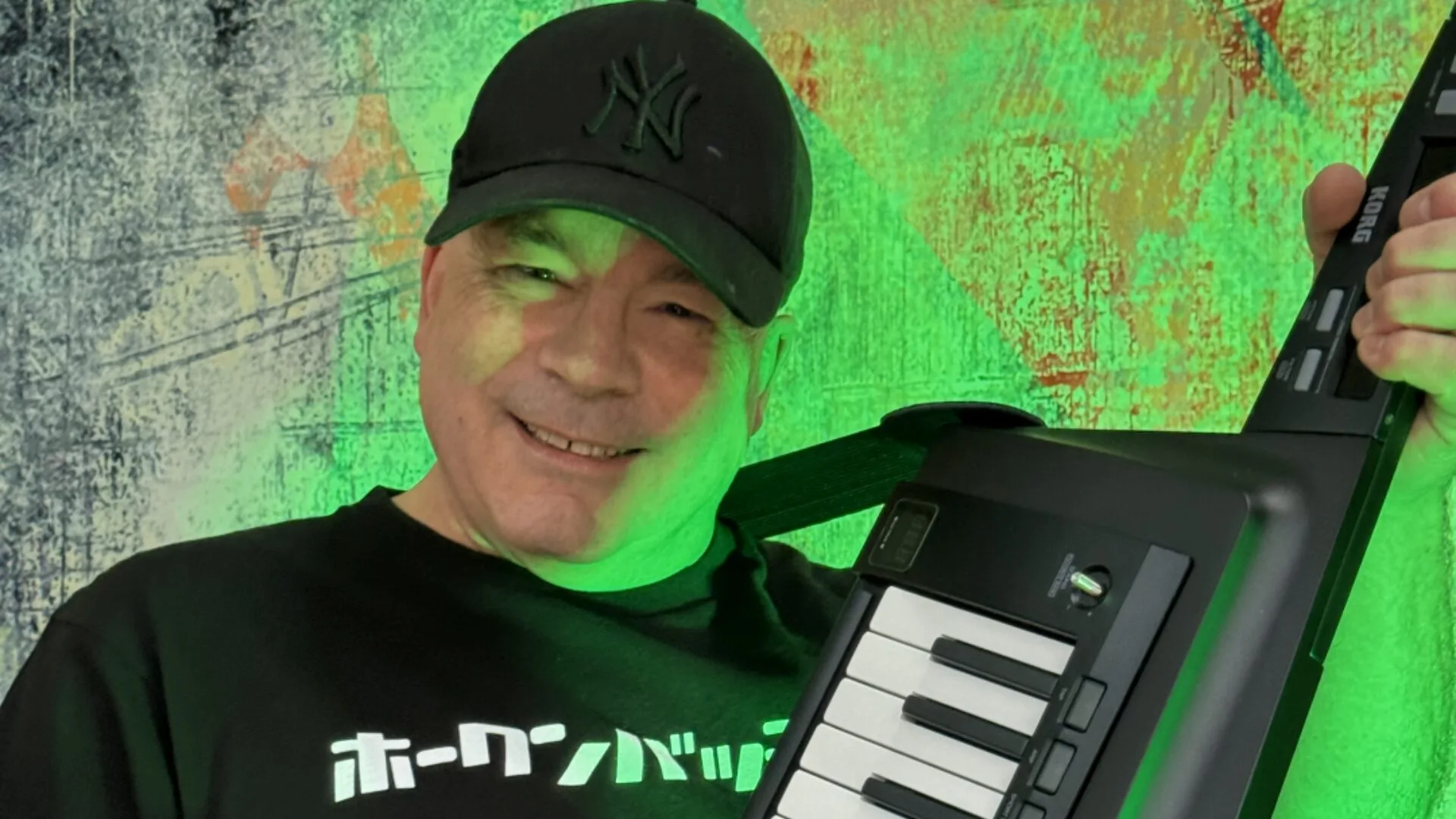
From 8-bit Hexadecimal Coding to the Environmental Sound Aesthetic of ‘Rhythmic Ambience’
David Wise is a British video game composer, sound designer and multi-instrumentalist. Since beginning work for Rare in 1985, David Wise’s career has spanned the NES, Super Nintendo, Nintendo 64, GameCube, modern consoles and PC. Major credits include Slalom, Wizards & Warriors, Battletoads, the Donkey Kong Country series, Diddy Kong Racing and Star Fox Adventures, followed by freelance projects such as Donkey Kong Country: Tropical Freeze, Tengami, Snake Pass, Yooka-Laylee, Gimmick! 2 and Nikoderiko: The Magical World. David Wise has long combined environmental sound, melody and rhythm with the spaces of a game. In a 2026 interview, David Wise described a central approach that has endured since Donkey Kong Country as ‘Rhythmic Ambience.’
Profile
- Name:David Wise
- Born:13 September 1967 (reported date; awaiting confirmation from an official biography); Leicestershire, England
- Occupation:Video game composer, sound designer and musician
- Active:1985–present
- Principal employment:Rare, 1985–2009; initially on a contract/freelance basis, later full-time
- Current work:Freelance composer; David Wise Sound Studio
- Instruments:Keyboards/piano, guitar, bass, drums and percussion, brass, saxophone/EWI and others
- Key series:Donkey Kong Country, Battletoads, Diddy Kong Racing, Star Fox Adventures, Yooka-Laylee
- Key pieces:Aquatic Ambience, DK Island Swing, Stickerbush Symphony, Forest Interlude and others
Public sources commonly give either Leicester or Coalville, Leicestershire as David Wise’s birthplace. David Wise’s own interviews more often discuss living, studying and working in Leicester. Without a current official biography establishing the precise town, this profile uses the broader location of Leicestershire, England.
Learning Music by Ear, Outside the Conservatoire Route
David Wise grew up in the Leicester area. In a recent Retro Gamer interview, David Wise recalled listening to an older brother practising piano, then finding the melodies on the family piano by ear. After acquiring an acoustic guitar, David Wise began writing original music. During adolescence, David Wise also played trumpet, cornet, flugelhorn and drums, and joined local bands. Formal training was relatively brief: piano lessons led to approximately Grade 5 in the British examination system, but David Wise has repeatedly described a musical education based largely on self-teaching and learning on the job.
This path helps explain why David Wise does not primarily see himself as a conservatoire-trained composer in the traditional sense. David Wise has consistently stressed performance, listening, the physical feel of instruments and direct experimentation. Whether entering data by hand for an 8-bit sound chip or using virtual instruments, live guitar, saxophone and percussion in modern projects, David Wise tends to establish the relationship between sound and movement before settling on a particular writing method.
Among musical influences, David Wise has publicly named The Police, Phil Collins and a broad range of 1980s rock, dance music and synthesizer-based film scores. After entering games, David Wise repeatedly listened to Koji Kondo’s music for Super Mario Bros. and The Legend of Zelda, and found Tim and Geoff Follin’s Plok particularly inspiring. Unlike creators who first study game music before joining the industry, David Wise has long drawn simultaneously on popular music, band performance, film scores and games.
Joining Rare: A Career Turn in a Music Shop
In the mid-1980s, David Wise worked at Sound-Pad, a music shop in Leicester, demonstrating keyboards, drum machines and the then relatively novel MIDI equipment. David Wise connected a Yamaha CX5 music computer to external keyboards and used original compositions for demonstrations. When Rare founders Tim and Chris Stamper visited the shop, they heard the demos and asked who had written them. On learning that the music was David Wise’s, they invited David Wise to make music for Rare’s games. David Wise has repeatedly described the encounter as almost entirely accidental.
David Wise began working with Rare around 1985, with Slalom among the earliest major assignments. In Rare’s initially small production environment, David Wise handled a substantial share of the company’s music and sound work. Around 1994, the arrival of audio staff including Eveline Fischer, later credited as Eveline Novakovic, Robin Beanland and Graeme Norgate helped develop Rare’s audio production into a team effort.
David Wise recalls still being a freelance or contract musician when starting the Donkey Kong Country demos, becoming a full-time Rare employee during the project. A careful account is therefore that David Wise worked continuously for Rare from 1985, began on a contract basis, became a long-serving central audio contributor, and formally moved to full-time employment during Donkey Kong Country.
The 8-bit Years: Writing Music in HEX
Slalom, Wizards & Warriors, Snake Rattle ‘n’ Roll and Battletoads established David Wise’s early sound. NES audio resources were extremely restricted: only a small number of monophonic voices were available for melody and bass, with a noise channel providing percussive sounds. For someone who had just been using MIDI, synthesizers and drum machines in a music shop, the hardware could feel like going from a modern studio back to a doorbell.
The difficulty was not simply the thinness of the sound, but the method of entering it. David Wise converted pitch, duration and other information into hexadecimal values and wrote them into subroutines, continuing this approach on the SNES. Compared with a MIDI sequencing layer, raw data saved processing and storage resources, but tightly connected a piece’s implementation to program logic. David Wise later reflected that years of solving problems with very few voices taught him to imply chords through arpeggios, use counterpoint to support bass and harmony, and treat restrictions as the starting point for creating sound.
The Battletoads series demonstrated David Wise’s ability to translate hard rock, rhythmic accents and action into chip-based sound. David Wise does not regard 8-bit as merely a retro filter that can be applied after the fact. At the beginning of this career, voice stealing, data size, loop length and competition from sound effects were real system constraints, and the music had to be written to work within them.
Donkey Kong Country: Music Design Starting with the Level
Donkey Kong Country, released in 1994, was a pivotal project in David Wise’s career. Its division of work needs to be clear: the first game’s soundtrack was not a solo score. David Wise wrote most of the music, while Eveline Fischer contributed pieces including Simian Segue, Voices of the Temple, Forest Frenzy and Tree Top Rock; Robin Beanland wrote Funky’s Fugue. David Wise has expressly acknowledged this collaboration in interviews.
Initially, Rare asked David Wise for only three jungle demos. Because Donkey Kong was such an important Nintendo property, David Wise assumed that a Japanese composer might eventually replace the music. Instead, the three demos were joined together as DK Island Swing, which became one of the series’ signature themes. Thereafter, scene artwork and playable levels provided the principal creative cues. Jungle, cave, underwater, snow, mine and factory settings called not simply for different genres, but for different sonic materials.
64KB, Wave Sequencing and Aquatic Ambience
The SNES SPC700 audio system brought sample playback, but its available audio memory remained extremely limited. David Wise often describes that working environment in terms of 64KB. To avoid the extra resources required by a MIDI layer, David Wise retained the HEX data approach used on the NES and continually reduced samples, loop points and sequence data.
Aquatic Ambience is among the most representative results of that method. Inspired by the Korg Wavestation’s Wave Sequencing concept, David Wise recombined very short waveforms, sometimes single cycles, in different orders so that a small sample collection could produce continuously changing timbres. David Wise later recalled spending roughly five weeks on its technical implementation. The work became an important foundation for several subsequent years of SNES sound production.
This sound was not simply an attempt to imitate real instruments more closely. Aquatic Ambience’s synthesized textures, sense of delay and slow unfolding respond to the floating rhythm of underwater play; the environment itself enters the musical thinking. In a 2026 GameBlast interview, David Wise recalled incorporating birds, frogs and other environmental elements into rhythmic layers during the SNES years, describing the approach as ‘Rhythmic Ambience.’
Terminology note: GameBlast published the 2026 interview in Portuguese, using “Ambiência rítmica.” “Rhythmic Ambience” here is a translation of that expression, rather than a verified verbatim English quotation.
Donkey Kong Country 2 and Stickerbush Symphony
Donkey Kong Country 2: Diddy’s Kong Quest (1995) gave David Wise greater creative freedom. The production credits for Nintendo of America’s 1996 Donkey Kong Country Trilogy album attribute the second game’s music as a whole to David Wise. David Wise likewise recalls receiving virtually carte blanche after the first game, with room to pursue further experimentation.
Technically, David Wise went further by sampling synthesizers such as the Roland Juno-2 at different filter cutoff and resonance settings, then rearranging the data on the SNES to simulate filter sweeps the hardware could not perform directly. Stickerbush Symphony, also often listed under the level or soundtrack name Bramble Blast, is a defining example. It was originally conceived for an underwater level, but the second game had no corresponding underwater stage. With development time running short, it was used for the bramble levels instead, creating an unusual contrast between visual danger and musical calm.
Forest Interlude, Mining Melancholy, Bayou Boogie and Hot-Head Bop likewise show that David Wise was not building a single jungle-music template for platform games. The writing moved continually between synthesizers, environmental sound, dance rhythms, percussion, jazz and melody. In 2026, Pitchfork revisited Stickerbush Symphony as an independent music review, illustrating how these 16-bit works now circulate beyond their original games and specialist game-music publications.
The Third Game: Distinguishing SNES and GBA Versions
The SNES soundtrack to Donkey Kong Country 3: Dixie Kong’s Double Trouble! (1996) was mainly composed by Eveline Fischer, with David Wise contributing selected tracks. Nintendo of America’s trilogy soundtrack credits distinguish their contributions. The third game’s entire score should therefore not be attributed to David Wise.
The 2005 Game Boy Advance version is a different case. David Wise joined late in development and wrote a completely new score for the handheld edition. David Wise first tried converting the SNES soundtrack, but felt that it did not work well within the handheld’s limits. Rather than produce a diminished version, David Wise wrote music suited to the portable hardware. This decision reflects a longstanding principle: a port need not mean a copy, and the target platform’s audio boundaries can themselves determine a new compositional approach.
Nintendo 64 and GameCube: From Diddy Kong Racing to Star Fox Adventures
Diddy Kong Racing (1997) took David Wise from side-scrolling platform action into high-speed racing. The initial challenge was not timbre, but finding a musical language that matched the pace of competition. David Wise recalled the team studying a great deal of Mario Kart music and deliberately exaggerating its cheerful, distinctly Nintendo-like character. Hot Top Volcano used scales and instrumental associations with an Indian flavour, also inspired by the music of Super Mario 64’s desert and lava settings.
The hardware of this period permitted more developed MIDI and sampling workflows, so David Wise no longer had to enter every note in HEX as on the NES and SNES. The attention to setting and gameplay speed remained. Racing music needed an immediate impact, clear beat and bright melody; the large adventure project originally called Dinosaur Planet instead called for spatial percussion, instruments associated with different cultures and cinematic scene-building.
Dinosaur Planet eventually became Star Fox Adventures for GameCube in 2002. Existing Star Fox themes were introduced relatively late in development, requiring David Wise to combine music already built for an original world with Nintendo’s established thematic identity. David Wise saw this generation as a substantial improvement in sound quality, while noting that graphics and other systems still competed for audio resources even with larger disc capacity. Hardware progress never eliminated the question of resource allocation.
Beyond Composition: Sound Effects, Foley and Early Involvement
At Rare, David Wise’s work extended beyond background music. David Wise regularly produced sound effects and preferred recording original Foley and live material to relying entirely on commercial libraries. As David Wise has observed, repeated use of the same libraries can become recognisable to experienced listeners; recording original material gives a game a more distinctive sonic identity.
Another important habit was joining development early. David Wise recalled Tim Stamper believing that music and effects helped the team imagine a complete product from the beginning. David Wise therefore often started composing shortly after development began, using playable builds, images and the direction of the levels to revise musical judgments. This produced many pieces that were ultimately unused, but meant that music was not an ornament attached at the end.
The practice continued into freelance work. On projects such as Tengami and Snake Pass, David Wise still stressed how controlling the character directly helped reveal the game’s rhythm. Visuals, movement speed, level materials and modes of interaction could directly affect BPM, instrumentation and sonic density.
Leaving Rare: From Staff Composer to Independent Collaborator
After Microsoft acquired Rare, the company’s size and development processes changed. David Wise left in 2009 after more than two decades of work for the studio. In discussing the decision, David Wise did not reduce it to a single conflict, instead explaining that hierarchy, direction and the division of responsibilities in a larger organisation made the desired creative freedom harder to find. The work was also gradually moving away from the game composition David Wise wanted to continue doing.
David Wise continued as a freelance composer and sound designer and established David Wise Sound Studio. Independence made it possible to move between major properties and small indie games: returning to Nintendo and Donkey Kong on one hand, and contributing to experimental projects with only a few core developers on the other.
Tengami: Relearning Instruments through Images and Materials
Nyamyam’s Tengami is built visually around Japanese pop-up books and folding paper. In response to its art and interaction, David Wise combined impressions of traditional Japanese instruments with Western orchestral and atmospheric writing. David Wise did not present this as orthodox traditional Japanese music, candidly explaining that much of the research involved watching accomplished performers play instruments such as the koto, followed by a strongly personal interpretation. Faced with a similar project again, David Wise would want to acquire the instruments and learn to play them directly.
This attitude reveals another feature of the freelance period. Researching a style is not about reproducing a musical culture wholesale, but understanding how instruments sound and how fingers alter pitch and timbre, then translating those physical actions into sound appropriate to the game’s world.
Returning to Donkey Kong: Tropical Freeze
Donkey Kong Country: Tropical Freeze (2014) brought David Wise back to the series most closely associated with this career after leaving Rare. Retro Studios head Michael Kelbaugh made the initial contact. Early in the project, David Wise travelled to Austin, Texas, to discuss the direction with Retro and Nintendo’s Kenji Yamamoto, then maintained weekly remote meetings with Retro audio lead Scott Petersen.
Unlike the 1990s games, Tropical Freeze was no longer restricted to 64KB of sample space. David Wise combined live instruments, personally played guitar and saxophone, VST instruments, layered structures and a wider dynamic range. David Wise later described the result as an answer to how the original Donkey Kong Country might sound without those earlier limitations.
The score did not simply give old pieces a high-fidelity makeover. The new Aquatic Ambience deliberately stayed close to the original because David Wise felt its structure already worked well. Other tracks introduced extensive new material or concealed older themes within fresh instrumentation. Kenji Yamamoto asked that the overall sound not be too familiar, and the choir in Grassland Groove was even recorded by Nintendo employees who regularly sang in choirs. David Wise thus preserved the series’ auditory memory without turning the whole score into a remake collection of its 1990s music.
David Wise has said that an individual Tropical Freeze track typically took between three days and two weeks, with multilayered pieces taking longer. Live and virtual instruments coexisted, and live performances were sometimes quantized to fit the overall style. Greater realism was not an end in itself: the important fit was with the game’s movement and its overall musical language.
Snake Pass: Judging Rhythm by Playing First
Snake Pass (2017) is one of the clearest examples of David Wise’s gameplay-led approach after Rare. Players control a snake through wriggling and coiling, with slower movement and a stronger sense of bodily control than in conventional fast platformers. David Wise explicitly noted that although composing from footage alone was possible, directly controlling the character made the rhythm of play clearer.
Sonically, David Wise translated the game’s extensive wood and bamboo imagery into organic sounds such as bamboo flutes, bamboo percussion and ocarina, with South American or Aztec associations. The score also drew on the 1950s rock-and-roll roots of the earlier Snake Rattle ‘n’ Roll, producing what David Wise called ‘Aztec rock and roll.’ This was not a fixed personal style given a new surface, but experience from an older work responding to a new control scheme.
Reuniting with Former Rare Musicians: Yooka-Laylee
With Playtonic founded by former Rare staff, Yooka-Laylee (2017) naturally reunited David Wise with Grant Kirkhope, Steve Burke and other former colleagues. David Wise handled selected level and challenge music. Dividing the work preserved each composer’s individuality while maintaining the lightness, recognisability and sense of place required by the platform adventure.
Yooka-Laylee and the Impossible Lair (2019) again used several composers. David Wise explained that a familiar team already understood one another’s expectations for quality and style, reducing communication costs and giving freelance work some of the creative intensity of Rare’s early small-team environment.
Yooka-Replaylee (2025) gave that musical heritage a further orchestral treatment. Official material specifies a newly arranged orchestral soundtrack based on the original music by Grant Kirkhope and David Wise, produced with the City of Prague Philharmonic Orchestra. Remaking here meant more than improving sample fidelity: it connected Rare-style melodic writing of the 1990s, indie game music of the 2010s and live orchestral production.
Recent Work: Retro Platforming and Modern Live Recording
David Wise composed the music for Gimmick! 2 (2024). SUNSOFT and publisher materials explain that David Wise wrote new melodies while reinterpreting classic material from the 1992 original. The soundtrack was creatively directed by Pelle Cahndlerby and recorded live in Sweden with Joel Bille. For a sequel deliberately continuing the physical feel of a Famicom-era game, this combination of new melodies, older material and modern live recording closely matches David Wise’s longstanding experience of working across hardware generations.
David Wise was also the principal composer of Nikoderiko: The Magical World that year. Its official store presents the music as part of an experience recalling platform gaming’s golden age. The later digital soundtrack lists 19 tracks covering underwater areas, mines, snow, forests, bosses and other characteristic platform-game spaces. These environmental categories resemble those of Donkey Kong Country, but the means of realising them have moved from severe sampling restrictions to a full modern production environment.
In 2026, Steam still lists the indie platformer 99 Fails as planned for release within the year and names David Wise as the main soundtrack creator. Its soundtrack page also names collaborators Pawel Pachniewski and Ivan Titkov, with Sam Arnstein as producer. David Wise is therefore better described as a freelance creator still supplying original music for new projects, moving between independent development and established properties, than simply as a nostalgia composer.
Live Performance and Public Events: Music beyond the Game
David Wise’s classic pieces have long been reinterpreted through fan arrangements, orchestral performances and game-music concerts. In May 2026, David Wise attended gamescom latam in São Paulo as a special guest for a public career panel, meet-and-greet sessions and live performances. With local game-music band Gameboys, David Wise performed pieces including DK Island Swing, Aquatic Ambience and Stickerbush Symphony. The event’s official material also notes a previous collaboration on a Stickerbush Symphony arrangement in 2017.
Such events show that David Wise’s works have formed an independent performance repertoire extending beyond the original games’ lifespans. Meanwhile, Nintendo continues to provide the soundtracks to Donkey Kong Country, Donkey Kong Country 2 and Donkey Kong Country 3 through Nintendo Music, bringing versions originally written within 16-bit hardware limits to new players through an official digital catalogue.
Creative Approach
Environmental Sound as Rhythm: Rhythmic Ambience
In 2026, David Wise used ‘Rhythmic Ambience’ to describe a longstanding characteristic: instead of writing a complete piece and laying environmental audio over it, birds, frogs, water, wooden impacts, airy textures and other environmental sounds can take on rhythmic and textural functions directly. Scene audio and music cease to be entirely separate layers; the level itself seems to become part of the percussion.
The approach is especially apparent in Donkey Kong Country’s underwater, swamp, forest and mine music. Modern works such as Tropical Freeze, Snake Pass and Nikoderiko realise it through live performance, virtual instruments and wider frequency response. The hardware has changed, but the idea of bringing environmental materials into musical structure remains continuous.
Understand the Speed of Play before Setting the Speed of Music
David Wise repeatedly stresses the importance of playing the game. Character movement, level rhythm and visual changes inform decisions about BPM, density and musical rise and fall. Diddy Kong Racing needs bright melodies that establish themselves immediately; Snake Pass’s slower movement calls for a more relaxed pace; Tengami’s page turns and touch interaction need more space. The stylistic range primarily follows the time-feel of gameplay, rather than a composer changing costumes to demonstrate versatility.
Restrictions as Part of a Sonic Identity
The NES’s few monophonic voices, the SNES’s tight sample memory and the Game Boy Advance’s portable audio conditions all forced David Wise to find specific sonic solutions. These were not regarded simply as technical obstacles. Aquatic Ambience’s waveform recombination, Stickerbush Symphony’s simulated filtering and the complete rewriting of Donkey Kong Country 3 for GBA all show how a platform’s limitations can determine the compositional method.
The same thinking persists on modern hardware, shifting from whether a sound can be produced to why that sound is needed in that moment. Tropical Freeze offers greater technical scope yet deliberately preserves the timbral memory of Aquatic Ambience. Gimmick! 2 can use full live recording while still organising its melody and physical feel around older platform-action traditions.
Multi-instrumental Performance and Sound before Labels
David Wise plays keyboards, guitar, bass, drums and percussion, brass, saxophone and EWI, among other instruments. No single orchestration serves as a fixed trademark. Donkey Kong Country can be ambient and synth-based; Battletoads leans towards hard rock; Diddy Kong Racing moves into exaggerated cartoon racing; Tengami draws on Japanese instruments; Snake Pass combines bamboo timbres with rock and roll.
The common thread is attention to the physical quality of timbre, rather than genre. David Wise treats synthesizers, samples and acoustic instruments as one pool of materials. Live guitar can be quantized when needed, while virtual woodwinds can gain more performance-like dynamics through an EWI. Technology serves the game’s imagery and rhythm instead of determining which genre a work should belong to.
Collaboration and Development Processes
From Rare to Retro Studios, Nyamyam, Sumo Digital, Playtonic and recent European indie teams, David Wise has worked across projects of different scales. This experience suggests that the earlier music enters development, the more it can shape the team’s understanding of the world, while larger projects bring more complex communication and resource allocation. David Wise values both the creative freedom of small teams and the performance, recording and technical support available in larger organisations.
Remote collaboration with Kenji Yamamoto and Retro’s audio team on Tropical Freeze exemplifies David Wise’s later working arrangements. A composer need not sit inside the development studio, but does need ongoing access to playable builds, the visual direction and production leads. Freelance game-music work today does not mean working in isolation; it relies even more on clear audio direction, feedback cycles and collaboration across regions.
Career Significance and Influence
David Wise’s professional contribution cannot easily be reduced to ‘the Donkey Kong Country composer.’ Beginning in the NES era, David Wise has worked continuously through chip music, sampled consoles, MIDI, streaming audio, virtual instruments and modern live recording. Major works concentrate on platform action, racing and adventure—genres deeply dependent on the rhythm of character movement.
Aquatic Ambience and Stickerbush Symphony continue to inspire arrangements not only because their melodies are memorable, but because their original sound design is inseparable from specific hardware conditions. A modern recreation that removes SNES sample compression, short waveform loops and grainy textures may not reveal a supposedly true version. Pitchfork’s 2026 retrospective likewise points out that these restrictions have become part of how the music sounds.
Historically, David Wise represents a form of British game-audio production established in the 1980s and 1990s, when composition, data implementation, effects and hardware optimisation had no clear boundaries. In the modern era, David Wise has translated that experience into the selection of environmental timbres, judgments about gameplay rhythm and collaboration across teams. The technical language has changed substantially, but the creative question remains: how can the game world itself become part of the music?
Selected Works
| Year | Work | Contribution / notes |
|---|---|---|
| 1987 | Slalom | Early NES music for Rare; repeatedly identified by David Wise as one of his first important game-scoring jobs. |
| 1987 | Wizards & Warriors | Composition; some material originated in piano pieces David Wise wrote as a teenager. |
| 1990 | Snake Rattle ‘n’ Roll | Composition; its rock-and-roll language later informed Snake Pass. |
| 1991 | Battletoads | Music and sound; a representative combination of action, hard rock and chip sound. |
| 1994 | Donkey Kong Country | Principal composer, alongside Eveline Fischer and Robin Beanland. |
| 1995 | Donkey Kong Country 2: Diddy’s Kong Quest | Principal/full soundtrack composition, including Stickerbush Symphony. |
| 1995 | Donkey Kong Land | Music contribution, alongside Graeme Norgate and the Rare sound team. |
| 1996 | Donkey Kong Country 3 | Selected pieces; Eveline Fischer was the principal composer of the SNES version. |
| 1997 | Diddy Kong Racing | Principal composer; cartoon racing and styles drawn from different regions. |
| 2002 | Star Fox Adventures | Principal music; material carried over from Dinosaur Planet and integrated with Star Fox themes. |
| 2005 | Donkey Kong Country 3(GBA) | Music Score & Sound; a newly composed soundtrack for the handheld version. |
| 2007 | Diddy Kong Racing DS | Music adaptation and additional work. |
| 2008 | Viva Piñata: Pocket Paradise | Adaptation of existing music and additional pieces for the DS version; a late Rare project. |
| 2014 | Tengami | Complete score, combining impressions of traditional Japanese instruments with a Western approach. |
| 2014 | Donkey Kong Country: Tropical Freeze | Principal music, working with Retro Studios and Kenji Yamamoto. |
| 2016 | Star Ghost | Music. |
| 2017 | Snake Pass | Music; ‘Aztec rock and roll’ and organic timbres. |
| 2017 | Yooka-Laylee | Collaborative score with Grant Kirkhope, Steve Burke and others. |
| 2019 | Yooka-Laylee and the Impossible Lair | Collaborative score within a multi-composer team. |
| 2020 | Tamarin | Principal soundtrack by David Wise; Graeme Norgate also composed the factory ambience music. |
| 2023 | Everhood: Eternity Edition | Guest piece: The Jazz Cult. |
| 2024 | Gimmick! 2 | Principal composer; new music and reinterpretations of the original, with some live recording. |
| 2024 | Nikoderiko: The Magical World | Principal composer; the official digital soundtrack contains 19 tracks. |
| 2025 | Yooka-Replaylee | Music by Grant Kirkhope, David Wise and collaborators; new orchestral arrangements recorded with the City of Prague Philharmonic Orchestra. |
| 2026 (planned) | 99 Fails | Principal soundtrack; as checked on 12 September 2026, Steam still listed a planned 2026 release. |
This is a representative index, not a complete career list. Many Rare-era works involve ports, sound effects, additional music or shared production. Individual track attribution should be checked against the staff credits for the specific platform version, the soundtrack booklet or explicit developer statements.
Suggested Listening
- Wizards & Warriors — Main Theme | NES era: hear how a few voices, arpeggios and counterpoint imply complete harmony.
- Battletoads — Pause Music and level music | 8-bit era: hear rhythmic patterns and hard-rock language compressed into chip voices.
- DK Island Swing — Donkey Kong Country | Three jungle demos becoming a signature series theme.
- Aquatic Ambience — Donkey Kong Country | Wave Sequencing ideas, slowly evolving layers and the pace of underwater movement.
- Fear Factory — Donkey Kong Country | Industrial timbres, mechanical beats and forward motion in platform action.
- Stickerbush Symphony / Bramble Blast — Donkey Kong Country 2 | Simulated filtering, loop structure and contrast with dangerous scenery.
- Forest Interlude — Donkey Kong Country 2 | A representative example of Rhythmic Ambience, combining natural sounds, synthesizers and a sustained pulse.
- Hot-Head Bop — Donkey Kong Country 2 | Another side of platform-game writing, leaning towards dance and world-music idioms.
- Hot Top Volcano — Diddy Kong Racing | Regional timbral associations and Nintendo-like brightness in racing music.
- Thorntail Hollow (Day / Night) — Star Fox Adventures | Environmental continuity and day/night atmosphere in a large adventure.
- Five Stories to Heaven — Tengami | Impressions of Japanese instruments combined with Western compositional language.
- Windmill Hills — Donkey Kong Country: Tropical Freeze | Live guitar, country music and light-footed platform movement.
- Grassland Groove — Tropical Freeze | African vocals, choir and the multilayered organisation of level rhythm.
- Seashore War — Tropical Freeze | Melody, guitar and changing environments; David Wise still named it among personal favourites in 2026.
- Snake Pass — Main Theme / Bol-Dor’s Realm | Bamboo timbres, organic percussion and a slower pace of movement.
- Gimmick! 2 — soundtrack selections | Compare material from the 1992 original with the handling of modern live recording.
- Aqua — Nikoderiko: The Magical World | Hear how David Wise revisits underwater sound in a modern platform game.
Official listening
Tengami: the official Nyamyam soundtrack on Spotify. Player availability varies by region. Classic Donkey Kong music is available through Nintendo Music’s official catalogue, with an eligible Nintendo Switch Online membership.
Tengami — Spotify · Nintendo Music
Sources
The sources below prioritise interviews with David Wise, official Nintendo and developer pages, and project store information. Soundtrack documentation and long-established archives supplement the historical attribution of individual pieces.
- Nintendojo|Interview: David Wise — Entering the profession, formal training, HEX coding, SNES memory, sound effects and early workflows.
- Nintendojo|Interview: David Wise – Page 2 — Musical direction for Diddy Kong Racing and Foley/sound-effect production.
- Nintendojo|Best of ND 2011 – Page 3 — Leaving Rare, creative freedom and the processes of large organisations.
- Square Enix Music / VGMO|Interview with David Wise — Early Rare work, shared DKC credits, Korg Wavestation, Juno-2, the GBA DKC3 rewrite and Star Fox Adventures.
- Rare Gamer|Rare Musician Tepid Seat — Beginning in 1985, early influences and the history of Rare’s sound team.
- Nintendo Life|The Making of Donkey Kong Country — Rare’s early audio team and the making of Donkey Kong Country.
- FACT|Ryan Hemsworth interviews David Wise — The original purpose of Stickerbush Symphony, DKC music and collaboration.
- Nintendo Life|Tropical Freeze Composer David Wise — Returning to Donkey Kong, Retro Studios, Kenji Yamamoto and remote collaboration.
- VGMpire|DKC Tropical Freeze Interview — Live instruments/VSTs, production time per piece, Grassland Groove and the reconstruction of Aquatic Ambience.
- The Ongaku|David Wise on composing music for Tengami — Composition workflow, game pacing, research into koto and other Japanese instruments, and modern tools.
- Nintendo UK|Tengami developer discussion — Nyamyam’s account of David Wise’s complete score and its combination of Japanese tradition with a Western approach.
- Nintendo Life|David Wise On Creating “Aztec Rock And Roll” For Snake Pass — Playing the game, assessing BPM, bamboo timbres and rock-and-roll ideas.
- Nintendo UK|The Making Of Snake Pass — The developers’ account of inviting David Wise and the influence of Rare.
- Game Informer|Rare’s Former All-Star Composers Talk About Reuniting For Yooka-Laylee — Collaboration among former Rare composers during the Playtonic era.
- Nintendo Life|Yooka-Laylee’s Audio Identity — Freelance work and the multi-person sound team on Impossible Lair.
- Clear River Games|Gimmick! 2 — The 2024 game, new melodies, remade older pieces and live recording in Sweden.
- SUNSOFT|Gimmick! 2 — Official game information and David Wise’s music credit.
- Nintendo|Nikoderiko: The Magical World - Director’s Cut — David Wise’s soundtrack credit and the game world.
- Steam|Nikoderiko OST & Digital Artbook — The 19-track digital soundtrack and composer credit.
- PM Studios|Yooka-Replaylee — The 2025 release and Grant Kirkhope/David Wise orchestral soundtrack information.
- Xbox Wire|Creating Yooka-Replaylee — Recording with the City of Prague Philharmonic Orchestra and the original music.
- Steam|99 Fails — The planned 2026 release and David Wise’s principal soundtrack credit.
- Steam|99 Fails Soundtrack — Soundtrack collaborators and the track page.
- gamescom latam|David Wise confirms attendance 2026 — The 2026 panel, meet-and-greet and live performance announcement.
- gamescom latam|Gameboys band performs with David Wise — The 2026 live collaboration and the artists’ earlier work together in 2017.
- GameBlast|gamescom latam 2026 — David Wise interview — David Wise’s 2026 discussion of rhythmic ambience and his musical identity; published in Portuguese.
- Pitchfork|David Wise: “Stickerbush Symphony” Track Review — A 2026 mainstream music retrospective on a classic piece and its contemporary circulation.
- Nintendo Music|Donkey Kong Country 2 — Nintendo’s official digital music catalogue.
- Donkey Kong Country Trilogy|Album Production Credits — Supplementary track-level credits for David Wise, Eveline Fischer and Robin Beanland across the trilogy.
- Retro Gamer Issue 264|David Wise — A substantial recent interview on early instruments, joining Rare, NES production and the composer’s career.
Nintendo Iwata Asks: the official Japanese spelling of Kenji Yamamoto’s name (山本健誌).