
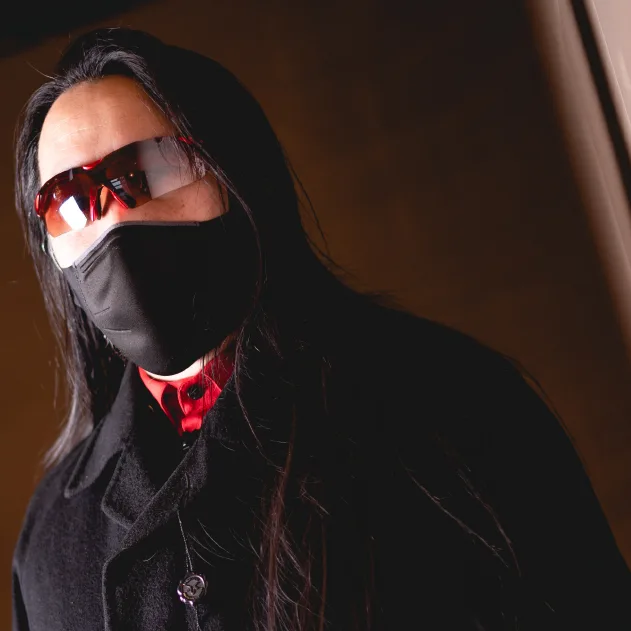
From Sound Design and Compositional Direction to Game-Music IP Production
Ippo Yamada is a Japanese game sound designer, composer, sound producer and music producer. He joined CAPCOM in 1993 and began in sound design; in 1996 he co-founded Inti Creates, where he has long worked on the sound of Mega Man Zero, Mega Man ZX, Mega Man 9 and 10, Azure Striker Gunvolt and many other titles. His career encompasses sound effects, composition, voice recording, audio implementation, album planning and live performance, illustrating the compound role of a sound producer inside a small-to-medium Japanese game developer.
Profile
- Japanese name: 山田 一法
- English name: Ippo Yamada
- Aliases / production name: IPPO; III (Triple I, a production name Yamada uses for projects rather than a group with fixed members)
- Birthplace: Kanagawa Prefecture, Japan
- Date of birth: Not publicly disclosed
- Education: Faculty of Science, Chiba University
- Occupations: Game sound designer, composer, sound producer, music producer, performer
- Active: 1993–present
- Career / current roles: CAPCOM (1993–1996); co-founder, company director and sound producer at Inti Creates; member of SENSORS
- Representative series: Mega Man Zero; Mega Man ZX; Mega Man 9 and 10; Azure Striker Gunvolt; Gal Gun; Blaster Master Zero
Yamada’s current official profile confirms that he was born in Kanagawa Prefecture, graduated from Chiba University’s Faculty of Science and joined CAPCOM in 1993. A birthday, specific city of birth and secondary-school history have not been confirmed by his current official biography and are therefore not treated here as established facts.
The CAPCOM Years: Beginning with Sound Design
Yamada did not enter the game industry through a conservatory education. His public biography records his science degree from Chiba University; in interviews, he has also described loving music from childhood and how a synthesizer and sequencer he received when young shaped his eventual move into sound work. After joining CAPCOM in 1993, his first main role was sound design.
He identifies Demon’s Crest as the first project on which he held primary responsibility. Around the same period he also worked on the sound of the Super Famicom version of Street Fighter II and the 3DO version of Super Street Fighter II Turbo. Storage and polyphony remained limited on early consoles, so every allocation of timbre, voice and sound effect had to respond directly to the hardware boundary.
The original Resident Evil redirected that technical experience toward spatial and psychological perception. Yamada recalls that the project initially carried the working title “Horror,” and that the team sought psychological fear rather than gore alone. Greater memory and polyphony were used for environmental sounds such as footsteps, weapon loading and room reverberation: footsteps echoing in a quiet room could create unease by themselves.
This experience established a professional perspective he has retained ever since. Sound work is not simply “assigning BGM to scenes,” but managing everything the player can hear: environment, action feedback, voices, music and the way each element plays through the program. Inti Creates’ current recruitment page similarly defines the sound role as work on “every sound heard in a game and the related tasks,” in a message signed by Yamada as company director and sound producer.
Inti Creates: A One-Person Sound Department at a Start-up
On May 8, 1996, Yamada founded Inti Creates with developers including Takuya Aizu and Yoshihisa Tsuda. The company’s English official site continues to list him as a co-founder, company director and central sound figure, while the Japanese recruitment page gives his title as director/sound producer.
At the beginning, the company had only around ten staff and Yamada was its sole sound employee. He composed, created effects and converted sound data; when a project needed voice recording, he also handled casting, studio booking, session direction and the full recording process. If the work could not be completed internally, he found external collaborators and took responsibility for production and direction. Inti did not add another formal sound-team member until autumn 2007, after Mega Man ZX Advent was complete.
Inti’s first game, Speed Power Gunbike, was released in 1998. In a 2021 interview, Yamada called it the first video game for which he composed music. It also concentrates the compound nature of start-up sound work: composition was only one task, while sound assets, voice production and data implementation all had to pass through the same responsible person.
“III” (Triple I) also needs to be understood in this context. Some releases list III as artist or arranger, which can suggest a fixed band. Yamada has explained that III is the production name he uses when acting as producer and has no permanent lineup. Each project brings together members of Inti’s sound team and outside creators as needed.
Mega Man Zero: Platform Limits and the Reconstruction of a Series Sound
The four Mega Man Zero games released from 2002 to 2005 were the period in which Yamada became widely known for both composition and sound direction. Inti Creates developed the series for CAPCOM on Game Boy Advance. Compared with the traditional Mega Man loop of choosing and entering discrete stages, the first Zero has a stronger continuous narrative; Yamada therefore approached its sound more like the continuity of television or film. When Zero 2 returned to a more conventional stage-select structure, the music could again adopt clearly defined stage themes.
The Game Boy Advance was not a generous audio platform. Yamada’s view of “limitations” is not that they are defects to disguise, but boundaries within which one asks what can still be expressed. He argues that imagination matters more than technology; when an outside constraint is absent, he may set a deliberate “rule” for himself to establish the project’s direction.
The Zero scores were not made by Yamada alone. As the projects developed, internal and external creators including Luna Umegaki, Tsutomu Kurihara and Masaki Suzuki joined the games and related albums, and the team continued to grow. A more accurate description is that Yamada held a core role in sound direction and production while contributing selected compositions; per-track attribution should follow the game credits and soundtrack booklets.
Remastered Tracks: Content Products Beyond a Soundtrack
The work with the longest afterlife from the Mega Man Zero period may be the Remastered Tracks series. Yamada has explained that the project began because CAPCOM was not then issuing a complete soundtrack and he wanted to organize the music into a product. The team did not stop at compiling the game audio: it made arrangement albums, while Yamada coordinated covers, booklets, drama tracks, Sound Sketches and guest arrangers.
Inti’s official corporate history records the sequence of releases: Remastered Tracks Rockman Zero on May 28, 2004; IDEA on October 8, 2004; TELOS on March 3, 2005; Physis on December 17, 2005; and Mythos on June 10, 2010, released alongside Mega Man Zero Collection.
These products placed music, characters and world-building materials in a single package. Inti’s official Physis page lists 31 rerecorded or remastered pieces from Mega Man Zero 4, the drama Ragnarok Record, a sixteen-page color booklet and the image song “Freesia.” “Freesia” has lyrics by Yu Mizuki and Ippo Yamada, music by Luna Umegaki, arrangement by III and vocals by Rie Tanaka.
Remastered Tracks should therefore not be reduced to “soundtracks.” They contain arrangements of game music, but also function as delivery systems for character songs, audio drama, supplementary text and visual design. During this period, Yamada’s role expanded from sound-production lead to music-product producer.
The music of Mega Man Zero exists in distinct forms, including the original Game Boy Advance audio, Remastered Tracks arrangements and later reworkings such as Mythos. Any discussion of a particular piece should first identify the release and arrangement version in question.
Mega Man ZX, Mega Man 9 and Mega Man 10
Mega Man ZX: Freshness and Techno Color
Mega Man ZX in 2006 needed to create “a new Mega Man” after Zero. Yamada has recalled that the team’s prior experience on a game adaptation of Eureka Seven may have influenced the result, giving ZX a fresher sound and a stronger techno character. The project changed more than timbre: through an image song, a remastered album and guest arrangements, it continued the product-oriented thinking developed during Zero.
ZX TUNES, released throughout Japan beginning December 15, 2006, rerecorded and remixed the game BGM and included the image song “Innocence.” In a 2021 interview, Yamada named “Innocence” among his personal favorites. By Mega Man ZX Advent and ZXA TUNES, new sound-team members including Ryo Kawakami and Hiroki Isogai had joined; Inti’s sound production was moving from a one-person department toward continuing collaboration.
Mega Man 9 and 10: Retro as More Than Timbre Copying
Mega Man 9 in 2008 was a retro project built around a deliberately imposed rule. Yamada framed it as an artful retro game for the era of downloads, remakes and WiiWare. Its musical direction began with the question of how to create a “Mega Man-like” sound, using the idea of following Mega Man 2 as a working frame.
For younger team members, this was not a matter of choosing square waves by feel; they first had to analyze, imitate and understand the music and data structures of the early games. Yamada cites “Thunder Tornado” as the track that most clearly condenses his own image of Mega Man. The official Original Soundtrack and Arrange Soundtrack then allowed the same body of material to retain both its 8-bit specification and a modern arranged form.
Although Mega Man 10 uses a similar retro surface, its concept was to create a new Mega Man rather than simply inherit every rule from 9. The team also invited composers from across the history of the series. Guest arrangers on the Mega Man 9 Arrange Soundtrack included Manami Matsumae, Yasuaki Fujita, Makoto Tomozawa, Akari Kaida and Shusaku Uchiyama. For Yamada, these releases were both music production and the curation of creators across generations.
Azure Striker Gunvolt: Player State and Character Songs
Azure Striker Gunvolt, released in 2014, was the first game Inti Creates both developed entirely in house and published itself. After many years developing outside IP, the project allowed the company to plan action design, characters, sound and release products within one system. Yamada served as sound producer/supervisor and joined Ryo Kawakami, Mina Hatazoe, Katsunori Yoshino and others in the music team.
The Gunvolt series should therefore not be described as a solo Yamada score. His central value lies closer to sound direction and production: defining the project’s electronic palette, action rhythm and vocal characters, then coordinating internal composers, outside arrangers, singers, players and engineers. The team and its guest arrangers continued to expand in the second and third games.
Kudos and Vocal Tracks: Bringing Performance into the Musical Foreground
One of Gunvolt’s most recognizable sound-design ideas is the connection between character songs and player performance. “Kudos” records chained attacks and skilled play. When its conditions are met, the sound field moves from BGM-led presentation into a vocal track sung by characters such as the virtual idol Morpho.
Official DLC information for Azure Striker Gunvolt 2 gives a clear example: with the corresponding item equipped and Kudos above 1,000, songs such as “Stratosphere,” “Clockwork Daydream” and “Burning Journey” can play during the game. The mechanism connects a performance score, system feedback, character ability and musical layer within a single event.
Vocals naturally occupy a strong foreground position in a mix, so once a song enters, the player can sense the current performance state without relying only on numbers in the interface. Morpho is also established within the world as a virtual idol whose songs wield power. The song is therefore not an external reward sound, but a sonic event acknowledged by character, narrative and mechanics alike.
Later games continued to expand the structure. Gunvolt 2 developed parallel vocal identities for Morpho and RoRo, while Gunvolt 3 introduced Luxia and multiple song versions associated with different states. Trigger conditions and variants change from game to game, but the underlying logic remains consistent: a character song belongs both to the world and to the system state.
From Game Songs to Music IP
Gunvolt songs did not remain inside the games. Tracks by Morpho, RoRo and Luxia were organized into character albums, drama tracks, music videos, physical concerts and virtual live events. MORPHO VIRTUAL LIVE 2020 featured Morpho, voiced by Megu Sakuragawa, and the Sumeragi Electronic Symphony Orchestra; its members included Ippo Yamada, Ryo Kawakami, Yamajet, Tsutomu Kurihara and Luna Umegaki. A Blu-ray and live CD followed.
In 2024, GUNVOLT RECORDS Cychronicle went further by transforming the accumulated vocal catalog into a rhythm game. Nintendo’s official description states that the base set of fifteen songs and subsequent DLC draw from five series games, CD-only releases and animation. The game also offers full-vocal playback, playlists and looping. Songs moved from “content within a game” to a library capable of supporting a new game in return.
This development continues the production logic of the Remastered Tracks era. A music product can carry more than BGM: it can contain character, text, drama and rearrangement. After years of accumulation, those songs can then move into concerts and new game genres. Yamada’s role expanded from composer to producer of cross-media music content.
Beyond Gunvolt: Team Sound Production and Card-en-Ciel
Inti’s sound team subsequently worked on Gal Gun, Blaster Master Zero, Bloodstained: Curse of the Moon, Dragon Marked for Death, Gunvolt Chronicles: Luminous Avenger iX, Gal Guardians and other series. Per-track composers differ among projects, and Yamada’s role may shift among sound producer, supervisor, composer, sound effects and performance. A work list must therefore identify his form of participation instead of assigning all Inti sound assets to one person.
The Gal Gun series continued Inti’s experience organizing character voices and song products. Card-en-Ciel took that capacity to a larger scale: its official song page publishes detailed credits for fifty character songs, while the soundtrack contains seventeen BGM pieces and fifty songs, sixty-seven tracks in all. Yamada served as producer/supervisor and personally composed or co-arranged songs including “Mirai ni Miracle,” “Magical Motion,” “Always Lovin’ You” and “Vondara Vinde.”
The Card-en-Ciel sound team includes Takumi Sato, Ryo Kawakami, Aoi Takeda, Luna Umegaki, Hiroaki Sano, takuya, s-don, Akari Kaida and many other composers and arrangers, as well as singers, lyricists and session players. Yamada’s central task was not to make every song sound like one personal style, but to organize a large collection of fictional works, characters and songs so that they remained distinguishable yet coherent within the same game.
He takes the same project-first approach to games based on animation. Yamada has said that when working with established properties such as Crayon Shin-chan, Eureka Seven, Doraemon and Fantastic Children, he gathers manga, animation, films and CDs, becomes a “fan” of the project and waits for its musical concept to emerge. For him, music integrating naturally with a particular game matters more than maintaining a fixed personal label.
A Profile of Composition and Production
Thinking in Terms of the Whole Sound, Not a Single BGM Track
Yamada’s professional starting point was sound design, not a composer’s role limited to melody and orchestration. Environmental audio at CAPCOM, effects and voice recording during Inti’s start-up years, and later character songs and soundtrack products all belong to one production chain. The phrase used on Inti’s recruitment page—“every sound heard in a game”—directly summarizes the scope of his responsibility.
Letting the Project Determine the Style
Surface style changes constantly, from the spatial horror of Resident Evil to the dense action music of Zero, the techno color of ZX, the 8-bit rules of Mega Man 9, Gunvolt’s electronic character songs and the fusion/techno-pop of SENSORS. Yamada does not place “personal identity” first; he judges completion by whether the music integrates naturally with the particular game.
Turning Constraints into Explicit Production Rules
His account of hardware limits is not a story of “overcoming obsolete technology,” but of identifying what can be expressed inside a boundary. The retro audio of Mega Man 9, the differentiated concept of Mega Man 10 and the deliberate “rules” he sets in personal work all show how constraints give direction and value to choices.
The Producer as Casting, Curating and Quality Control
Remastered Tracks, the ZX arrangement albums, guest lineups for Mega Man 9 and 10, Gunvolt character songs and the fifty songs of Card-en-Ciel all cross internal composers, outside arrangers, singers, voice actors, players, recording engineers and visual creators. The non-fixed lineup behind the III name likewise demonstrates an organization centered on project requirements.
A long-term collaborative network is essential to this method. Creators such as Ryo Kawakami, Luna Umegaki, Tsutomu Kurihara and Yamajet recur across different works and performances; the same collaborators can move among game data, arrangement albums, character songs and live events.
Developing Music Products Alongside Games
In projects led by Yamada, soundtrack products are not always passively assembled after a game is finished. Covers, booklets, drama tracks, Sound Sketches, character songs and guest arrangements may enter planning early, allowing a CD or digital album to extend the fictional world. With GUNVOLT RECORDS and Card-en-Ciel, song catalogs accumulated over time became direct foundations for new game content.
SENSORS and Current Activity
In 2011, Yamada formed SENSORS with Ryo Kawakami and drummer 源中功. Its official introduction emphasizes the combination of analog synthesizers, electronic sound and band performance. The project gives Yamada space outside specific game requirements to develop his preferences for melody, techno-pop and fusion.
On May 21, 2025, SENSORS released the eight-track album SEASONS. Yamada served as producer and Tsutomu Kurihara as engineer; the official description calls it a “techno panorama depicting Japan’s four seasons.”
As of September 3, 2026, Inti Creates’ recruitment page continued to identify Yamada as company director/sound producer. On September 23, 2026, he is scheduled to perform at GAME MUSIC LIVE EVENT Onko Chishin as “Ippo Yamada and the Majestic Fellow Band.” The organizer describes a live ensemble centered on his beautiful melodies and shaped by techno-pop and fusion.
The Nintendo Switch 2 version of Azure Striker Gunvolt Trilogy Enhanced and the additional Gunvolt GX content have been announced for October 22, 2026. Because the official material has not yet published sufficiently detailed per-track credits for all new music, the new Gunvolt GX pieces are not assigned here to Yamada personally.
From sound design in 1993 to the song-driven games, albums and performances of the 2020s, Yamada’s focus has remained the definition of how a work should sound and the organization of a team that can realize that definition in game systems, audio assets and subsequent content. His career is best understood as a continuous development from sound designer to sound producer, composer and music-IP producer, rather than as the work of a composer attached to only a few series.
Selected Works
The following is a representative index rather than a complete work list. Most Inti Creates projects are collaborations between an internal sound team and outside creators. Depending on the project, Yamada’s work may include sound production, supervision, composition, effects, implementation, performance or album production. “Team composition” or “sound production” does not mean that every track was written by him.
- 1994 — Demon's Crest; related versions of Super Street Fighter II
CAPCOM sound design; Yamada describes the former as his first project with primary responsibility - 1996 — Resident Evil
Sound design; footsteps, weapon-loading sounds and spatial reverberation reinforce psychological horror - 1998 — Speed Power Gunbike
Inti Creates’ first game; Yamada’s first full-game composition credit, alongside broad sound-production duties - 1999 — Love & Destroy
Early Inti Creates sound production, covering composition, effects and voice recording within a small team - 2002–2005 — Mega Man Zero 1–4
Sound production, team composition and overall direction; established the series’ sound language on Game Boy Advance - 2004–2010 — Remastered Tracks Rockman Zero series
Album producer/director; added arrangements, drama tracks, Sound Sketches, character songs and visual planning - 2006 — Mega Man ZX / ZX TUNES
Sound production and team composition; emphasized freshness, techno color and an image song - 2007 — Mega Man ZX Advent / Kabu Trader Shun
Sound production; on the latter, contributed the main melody and foundations of the story and systems, then added a character song to the soundtrack - 2008 — Mega Man 9
Sound producer, team composer and implementation; rebuilt an 8-bit language from the premise of following Mega Man 2 - 2010 — Mega Man 10
Sound producer, team composition, effects and implementation; invited composers from across the series’ history - 2011 — Gal Gun
Sound production and team composition; character songs, voice work and soundtrack products continued to expand - 2014 — Azure Striker Gunvolt / Mighty Gunvolt
Sound producer/supervisor and team composer; the former was Inti Creates’ first internally developed and self-published game - 2015 — Gal Gun: Double Peace
Sound production and team composition; a character-song system built around multiple routes - 2016 — Mighty No. 9 / Azure Striker Gunvolt 2
Music production on the former; sound producer and team composer on the latter, with parallel vocal identities for Morpho and RoRo - 2017 — Blaster Master Zero
Team sound production; composition, effects and series sound direction - 2018 — Bloodstained: Curse of the Moon
Collaborative sound production; Inti’s sound team handled composition and retro-audio implementation - 2019 — Dragon Marked for Death; Blaster Master Zero 2; Gunvolt Chronicles: Luminous Avenger iX
Sound supervision and team creation across several projects - 2020 — Bloodstained: Curse of the Moon 2 / MORPHO VIRTUAL LIVE 2020
Game sound-team work; performed in the virtual concert as a member of the Sumeragi Electronic Symphony Orchestra - 2021 — Blaster Master Zero 3
Team sound production, continuing the trilogy’s shared sound assets - 2022 — Gunvolt Chronicles: Luminous Avenger iX 2 / Azure Striker Gunvolt 3
Sound supervision and team creation; continued the use of vocal characters and state-linked musical material - 2023 — Gal Guardians: Demon Purge / Yohane the Parhelion -BLAZE in the DEEPBLUE-
Inti sound-team work, collaborative creation and soundtrack releases - 2024 — GUNVOLT RECORDS Cychronicle
Turned the series’ character-song catalog into a rhythm game, linking game, CD and video assets - 2024 — Card-en-Ciel; Umbraclaw; Divine Dynamo Flamefrit
Team sound production; Yamada served as producer/supervisor on the Card-en-Ciel soundtrack - 2025 — Gal Guardians: Servants of the Dark / SENSORS’ SEASONS
Game sound-team work; released an eight-track band album themed around Japan’s four seasons
Selected Tracks
- “Departure” — A representative track from Mega Man Zero 2. Research and discussion should distinguish the Game Boy Advance audio, the Remastered Tracks arrangement and the Mythos version.
- “Freesia” — Image song from Remastered Tracks Rockman Zero Physis; lyrics by Ippo Yamada and Yu Mizuki, music by Luna Umegaki, arrangement by III and vocals by Rie Tanaka.
- “Innocence” — Image song from ZX TUNES, composed by Ippo Yamada. In a 2021 interview, he named it among the pieces of his own work he especially likes.
- “Thunder Tornado” — A track from Mega Man 9. Yamada has said it concentrates his own understanding of “Mega Man music.”
- “Oilman Stage, Timeman Stage (200621978 mix)” — From CHIP TUNED ROCKMAN, based on Mega Man Powered Up; Yamada rearranged Toshihiko Horiyama’s original music in an 1980s techno-pop direction.
- “Reincarnation” — Insert song from Azure Striker Gunvolt; official credits list music by Ippo Yamada, arrangement by Yamajet and vocals by Morpho (Megu Sakuragawa).
- “Igniter” — Insert song from Azure Striker Gunvolt 2; official credits list music by Ippo Yamada, arrangement by Keishi Yonao and vocals by RoRo.
- “Twinkle, twinkle, W star” — Route-ending song from Gal Gun: Double Peace; official credits list music by Ippo Yamada and arrangement by Keishi Yonao.
- “Mirai ni Miracle” — Theme song for the fictional Divine Dynamo Flamefrit inside Card-en-Ciel, composed by Ippo Yamada.
- “Magical Motion” — Another song from the Divine Dynamo Flamefrit catalog, composed by Ippo Yamada and illustrating his continuing work with character songs.
- “Always Lovin’ You” — Theme song for Divine Dynamo Flamefrit II, composed by Ippo Yamada and arranged by Luna Umegaki.
- “Vondara Vinde” — Insert song from Card-en-Ciel, composed by Ippo Yamada and co-arranged with Morrigan.
- “Mechanical Life” / “Iphigeneia” — SENSORS tracks that show his handling of melody, techno-pop and fusion outside a specific game commission.
Sources
- Ippo Yamada official website, ABOUT: birthplace, education, year of joining CAPCOM and selected career history. Open source
- Inti Creates official site, About Our Company: founding date, co-founders and Yamada’s company role. Open source
- Inti Creates official site, company profile and history: directors, corporate history, games and music-CD release dates. Open source
- Inti Creates official Sound Designer recruitment page: Yamada, credited as director/sound producer, describes the role as covering every sound heard in a game and the work surrounding it. Open source
- Square Enix Music Online, “Interview with Ippo Yamada, Ryo Kawakami, and Hiroki Isogai” (2010): CAPCOM sound design, early Inti responsibilities, Mega Man, album production and creative philosophy. Open source
- Nintendo Life, “Quick Beats: Mega Man Composer And Inti Creates Founder Talks Backdraft And Bongos” (2021): first full-game score, personal preferences and “Innocence.” Open source
- Shmuplations, “Mega Man 9 – 2008 Developer Interview”: the development team on 8-bit specifications, sound implementation and series grammar. Open source
- Inti Creates, Remastered Tracks Rockman Zero Physis: 31 rerecorded/remastered tracks, drama, booklet and full credits for “Freesia.” Open source
- Inti Creates, ZX TUNES: credits for the lyrics, composition and arrangement of “Innocence,” plus album-production information. Open source
- Inti Creates, CHIP TUNED ROCKMAN: “Oilman Stage, Timeman Stage (200621978 mix)” and Yamada’s notes on its 1980s techno-pop direction. Open source
- Inti Creates, Remastered Tracks Rockman Zero Mythos: contents, arrangements under the III name and Yamada’s producer note. Open source
- Official Azure Striker Gunvolt 2 DLC/equipment information: when Kudos exceeds 1,000, songs including “Stratosphere,” “Clockwork Daydream” and “Burning Journey” can play. Open source
- Official Azure Striker Gunvolt PS4 page, MORPHO VIRTUAL LIVE 2020: the virtual concert, Blu-ray/CD, performers and song catalog. Open source
- Official GUNVOLT RECORDS Cychronicle website: rhythm-game format, character-song library and product information. Open source
- Nintendo official page for GUNVOLT RECORDS Cychronicle: the base set of 15 songs draws from games, CD-only releases and animation. Open source
- Official Card-en-Ciel song page: per-track lyricist, composer, arranger and vocalist credits for 50 character songs. Open source
- Official Card-en-Ciel soundtrack page: 17 BGM tracks and 50 character songs, 67 tracks in total, with Yamada credited as producer/supervisor. Open source
- SENSORS official website: the band’s formation, members, discography and the release of SEASONS. Open source
- Ippo Yamada official website, Tokyo Game Music Show 2025 page: the eight-track SEASONS, release date and “techno panorama of Japan’s four seasons” concept. Open source
- Official GAME MUSIC LIVE EVENT Onko Chishin page: Ippo Yamada and the Majestic Fellow Band on September 23, 2026, with a techno-pop/fusion program. Open source
- Official Azure Striker Gunvolt Trilogy Enhanced site: Nintendo Switch 2 release and the additional Gunvolt GX content announced for 2026. Open source