
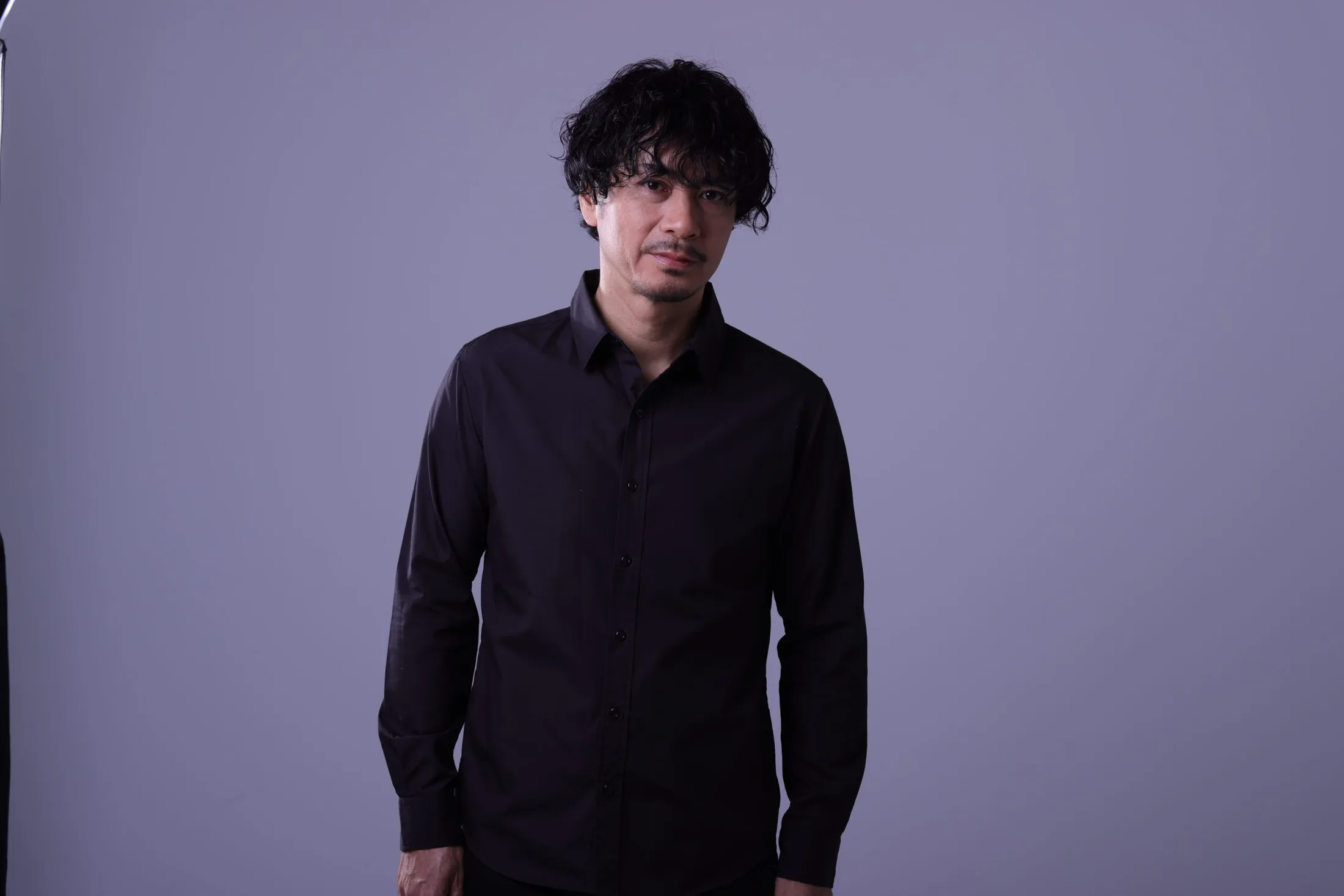
From FM-Synthesis Programming and Club Music to Game Production
Yuzo Koshiro is a Japanese composer, sound programmer and game producer, and the current president and representative director of game developer Ancient. His career spans Japanese home computers, arcades, consoles and contemporary digital distribution. He began by combining composition with custom MML and FM/PSG sound programming on the PC-8801; explored sample-based orchestral expression in ActRaiser; and brought the house, techno and hip-hop of his own time into action games through Streets of Rage. In longer-running series, he established the high-speed electronic vocabulary of Wangan Midnight Maximum Tune and reconsidered the relationship between FM synthesis and live performance in Etrian Odyssey. Recent projects such as SOL CRESTA, Earthion and Algolemeth continue this work between historical sound specifications and modern production.
Profile
- Chinese name: 古代祐三
- Japanese name: 古代 祐三(こしろ ゆうぞう)
- English name: Yuzo Koshiro
- Born: December 12, 1967
- Birthplace: Hino, Tokyo, Japan
- Occupations: Composer, arranger, sound programmer and game producer
- Active: 1986–present
- Current role: President and representative director of Ancient Corporation
- Early alias: YK-2
- Principal techniques and instruments: Piano, synthesizers, FM/PSG programming, MML and game-sound drivers
- Representative works and series: Ys; Sorcerian; ActRaiser; Streets of Rage; Wangan Midnight Maximum Tune; Etrian Odyssey; Earthion
Koshiro’s position on early Falcom titles is best described as part-time or external collaboration. In a 2026 roundtable, he explicitly stated that he was never formally employed by Nihon Falcom. Several projects were produced with other sound staff, including Mieko Ishikawa, so “contributed to the music of Ys and Sorcerian” is more accurate than attributing either complete soundtrack to him alone.
Musical Education, Home Computers and “YK-2”
Koshiro was born in Hino, Tokyo. His mother, Keiko Koshiro, taught piano, and he received piano instruction from an early age while also studying violin. As a primary-school student, he took lessons from Joe Hisaishi. Rather than simply asking him to reproduce written music, Hisaishi would play a phrase and ask him to develop what came next. This practice in improvisation and continuation offered another route toward the ear-led sense of structure and voice movement that would later shape his composition.
In junior high school, Koshiro acquired a KORG Delta synthesizer and began copying game music by playing it manually. On entering high school, he received an original NEC PC-8801. Because that model had no built-in music capability, he connected a CMU-800 and used the computer to control the sound source while recreating arcade music such as The Tower of Druaga. The later PC-8801mkII SR, with onboard FM synthesis, allowed him to begin making game music directly through a sound chip.
His route into professional work ran through the Video Game Music section of Mycom BASIC Magazine, not a record label or conservatory. Koshiro transcribed arcade music by ear, ported it to home computers and published program listings under the name “YK-2.” In a 2026 interview, he recalled missing a submission deadline, telephoning the editorial department directly and receiving permission to bring in his work. The editors accepted it after listening, beginning an ongoing relationship with the magazine.
Composition and programming were not clearly separated in this period. Melodies, timbre parameters, playback order, loops and effects all entered the sound chip as data and code. For Koshiro, the computer was not merely a back-end device that rendered music already conceived elsewhere; it was the medium that first convinced him he could compose.
The Nihon Falcom Period: Composition and Sound Programming in One Workflow
After contributing to BASIC Magazine, Koshiro began working on Nihon Falcom projects on a part-time basis. A track from the demo he submitted was accepted for Xanadu Scenario II, after which he contributed to Romancia, Legacy of the Wizard, Ys, Sorcerian and Ys II. His official works list likewise presents these titles as the core of his early career.
The main production environment at Falcom centred on the PC-8801mkII SR and Yamaha YM2203. At first, the principal resources were three FM voices and three PSG voices. Koshiro wrote melodies, created timbres, wrote or adjusted the sound driver, and entered the music through his own MML. In a 2026 roundtable, he explained that he continued using custom MML from the PC-8801 and PC-9801 through the later Mega Drive period, since work for internal sound hardware did not need to pass through conventional notation first.
Limited polyphony changed the way he thought about music. Piano training naturally encourages the simultaneous playing of chords, but FM and PSG work required every pitch, timbre and duration to be arranged voice by voice. Koshiro later described the lesson as moving away from a block-chord conception and towards hearing how each monophonic line moves, and how the combination of those lines transforms the music.
The music of Ys and Ys II is often treated as a defining example of his early melodic writing, but the collaborative boundaries remain important. Other Falcom sound staff contributed to both games, while ports, CD-audio editions, arranged albums and animation adaptations involved further arrangements and additions. Individual-track attribution therefore depends on the credits or soundtrack booklet for the version being discussed.
Freelance Work and the Founding of Ancient
After leaving Falcom, Koshiro worked independently on titles including The Scheme, Misty Blue and The Revenge of Shinobi. These projects extended his home-computer FM expertise while also requiring new sound methods for Mega Drive, X68000 and Super Famicom hardware.
Ancient was formally established on April 1, 1990. The family-run company continues to list Koshiro as president and representative director, with activities spanning the planning, production and sale of computer software, publications, music recordings and video. Ancient later developed the Game Gear version of Sonic the Hedgehog, The G.G. Shinobi, Beyond Oasis and other titles. In addition to composing, Koshiro served as producer or development lead on selected projects.
Ancient makes his professional position different from that of many freelance composers. Alongside external commissions, he has to consider game design, programming, art, testing, distribution and company management. Music is therefore not an isolated deliverable, but content shaped together with hardware choice, target audience, production scale and product format.
The 16-Bit Era: Two Radically Different Sound Directions
ActRaiser: Organising an Orchestra Within Eight Sample Voices
ActRaiser (1990) was a major point in Koshiro’s transition from FM-synthesis language to a sample-based console sound system. The Super Famicom could play sampled waveforms, but polyphony, memory and loop handling remained tightly constrained. Koshiro had to extract extremely short instrumental samples, find loop points that did not click, and use techniques such as crossfading to extend those fragments into sustained tones.
He did not regard the extra voices as an automatic measure of sophistication. In a KORG interview, he stressed that even with eight sampled voices, one still had to be reserved for sound effects, leaving the remaining voices to carry melody, bass, harmony and rhythm with a clear division of labour. The orchestral colour drew on existing listening experiences including Star Wars, Holst and Space Battleship Yamato; studying orchestral scores also revealed inner-voice writing that could be difficult to identify from recordings alone.
The importance of ActRaiser does not rest on a broad claim that it was the first console game to use symphonic music. Rather, it demonstrates how Koshiro compressed an unfamiliar ensemble into voice relationships that a specific machine could execute. Every region, stage and event retained a clear function, so the orchestral language still served game structure rather than displaying scale independently of play.
Streets of Rage: Bringing Contemporary Club Music Into an Action Game
If ActRaiser represents Koshiro’s exploration of orchestral writing, Streets of Rage shows his absorption of contemporary club culture. Conceived from the outset for an international market, the series translated house, techno, electro and hip-hop then circulating in Tokyo clubs into the FM and PCM sound of the Mega Drive.
This was not a retrospective “retro-electronic” style applied after the fact. In his Red Bull Music Academy interview, Koshiro explained that the first game referred to music actually heard at venues such as Club Yellow at the time. By the second game, the club scene had changed, and the score moved further toward techno. Here game music also became a record of a contemporary popular-music environment.
Koshiro led the score for Streets of Rage 2, with Motohiro Kawashima contributing several tracks; Streets of Rage 3 was co-composed by the two. The third game also introduced experiments in algorithmic generation, allowing systems to combine pitch, rhythm and timbre parameters. Because the series includes collaboration and regional variants, individual tracks should not be attributed solely from the simplified statement that Koshiro composed the soundtrack.
Functionally, these pieces rarely settle into long static passages. Street progression, enemy waves and horizontal scrolling demand constant forward motion, with bass lines, kick drums, short loops and rapidly introduced hooks encouraging the player to keep moving. Club music is both the timbre of the urban world and the temporal framework of the action.
Across Console Generations and Collaborative Projects
From the latter half of the 1990s into the 2000s, Koshiro’s range of projects continued to widen. Beyond Oasis, The Legend of Oasis, Culdcept, Shenmue, NAMCO x CAPCOM, Castlevania: Portrait of Ruin and Kid Icarus: Uprising asked him to work with Middle Eastern colour, fantasy adventure, board-game strategy, an open urban world, crossover theme songs, gothic action and large multi-composer structures.
Shenmue was a large-scale project completed by many composers and sound staff. The composer lineup for Castlevania: Portrait of Ruin also included Michiru Yamane and Masahiko Kimura, while Kid Icarus: Uprising divided work among composers including Motoi Sakuraba, Yasunori Mitsuda and Noriyuki Iwadare. Koshiro’s official credits specify partial composition or particular roles on such works, distinguishing participation from sole authorship of an entire score.
The opening and ending songs for NAMCO x CAPCOM reveal another side of his melodic writing. “Subarashiki Shinsekai” and “Itsuka Kitto, Tsuki no Shita de” combine the promotional force and narrative sweep of a crossover cast with the structure of popular song, complementing his better-known instrumental work.
Wangan Midnight Maximum Tune: Speed, Melancholy and Sustained Exhilaration
Since 2004, Koshiro has provided the core music for the arcade racing series Wangan Midnight Maximum Tune. Centred on the Shuto Expressway, night racing and its characters’ obsessions, the series uses trance and later electronic dance vocabularies not only to express speed, but also to answer the melancholy and fatalism within the source material.
In an official interview, Koshiro described the sound as a combination of the characters’ melancholic background and dance music. Tempos generally sit around 140 to 160 beats per minute, but speed is not produced by BPM alone. To prevent a conventional dance-music breakdown from draining tension during driving, he often reduces extended low-energy passages and sustains a level of excitement closer to a continuous chorus.
The practical length of an arcade race also shapes musical form. Once a race begins, players cannot wait through a long introduction, so the theme, pulse and principal timbres need to arrive quickly. At the same time, courses, rivals and story emotions require tracks to retain character. Koshiro creates separate balances for the in-game and soundtrack mixes: the former shares space with engines, tyres, voices and the arcade environment, while the latter is rebalanced for independent listening.
After more than two decades, the series has not remained inside one trance template. Recent instalments have also absorbed future funk, city pop and new jack swing. Koshiro sees continued change as a condition of the series’ vitality: continuity comes from speed, night and character emotion, not from repeating an identical arrangement in every game.
Etrian Odyssey: A Nostalgic Sound Source Was Not the Predetermined Answer
Etrian Odyssey (2007) needed a sound in which demanding dungeon exploration and nostalgia could coexist. Koshiro first produced demos with his usual modern sound sources, but they did not fully match the concept. Only after returning to the FM synthesis familiar from the PC-8801 period did the visuals, systems and music cohere. FM was therefore not a marketing label fixed at the start, but an answer reached through iteration.
The first three games made FM synthesis their principal sonic identity and preserved alternative sound-source versions on their soundtracks. With Etrian Odyssey IV on Nintendo 3DS, both the platform and team wanted a change, and Koshiro likewise felt that three games warranted a new direction. The score consequently used live performance extensively. Audience response to the earlier Super Arrange Versions had also shown that musicians could preserve melody and battle momentum while expanding dynamics and timbral detail.
Koshiro established his own recording studio in autumn 2013. From around Etrian Mystery Dungeon onward, a substantial portion of series recording was completed there. A dedicated space allowed repeated experimentation with equipment, microphones and ensemble configurations whenever time permitted, bringing composition, recording, editing and mixing into a more unified production system.
Etrian Odyssey Nexus brought together dungeons and music from across the series. New tracks could neither displace players’ memories of older music nor sound detached from that history. Koshiro treated the additions as connective tissue between generations of material, drawing on synthwave and progressive rock while retaining the series’ clear melodies and sense of adventure. Because the series also has numerous external arrangements and live versions, original composition, arrangement, performance and release version remain distinct credits.
Recent Work: From “Neo Classic Arcade” to Authentic Mega Drive Specifications
SOL CRESTA: Redefining “Neo” Instead of Merely Reproducing Old Timbres
For SOL CRESTA (2022), PlatinumGames proposed the concept “Neo Classic Arcade” and invited Koshiro to compose. His first approach imagined a fictional arcade board that combined a YM2151 with sixteen PCM voices, asking what might have happened if Nichibutsu had designed new hardware at the time. The demo was rejected because it sounded too close to other shoot-’em-up traditions.
After discussion with the development team, he returned to the OPL-family sound more strongly associated with the Cresta lineage. The core design became multiple layered YM3812 (OPL2) parts supplemented by PSG, PCM and effects. This process shows that “retro” is not a matter of selecting a familiar chip and applying habitual gestures: the project had to preserve both the earlier series’ sonic identity and Koshiro’s own writing.
Earthion: Composer, Company Director and Game Developer in One Project
Earthion is a side-scrolling shoot-’em-up developed by Ancient. Koshiro composed the music and determined the overall direction with programmer and game developer Makoto Wada. Download and physical editions for modern platforms, including Nintendo Switch and PlayStation 5, arrived first; as of September 2026, the official site continued to list the Mega Drive-compatible cartridge edition for release during 2026.
Earthion was not designed for modern systems as a set of assets that merely looked like Mega Drive material. Authentic 16-bit specifications are a central constraint: graphics, sound, capacity and performance must all remain executable on the historical hardware. Modern versions preserve that core while accommodating the display, input and distribution requirements of current platforms.
Earthion Original Soundtrack, released by Ancient on July 31, 2025, contains 31 tracks. Physical editions extend beyond CD to vinyl and cassette. Planning music assets and game products together allows the project to address contemporary players, physical collectors and owners of original-style hardware, while reflecting Ancient’s combined game-development and music-publishing structure.
External Projects in 2025–2026
In 2025, Koshiro and Tee Lopes both joined SEGA and Lizardcube’s SHINOBI: Art of Vengeance as composers. The collaboration connects Koshiro’s history on The Revenge of Shinobi with a reinterpretation led by a newer composer and a contemporary action system.
The soundtrack for Mina the Hollower, released on May 28, 2026, was led by Jake Kaufman and includes two special tracks by Koshiro. The in-development automated dungeon RPG Algolemeth has announced Koshiro as composer of its complete BGM, rendered in Mega Drive/Genesis-style FM synthesis. As of September 7, 2026, Steam continued to list a planned 2026 release.
Game-culture event The Tenth Mosaic will be held at the Institut français de Tokyo on September 22 and 23, 2026. Its current music page explicitly lists Koshiro as a live guest, with his appearance scheduled for September 23 from 4:30 to 5:30 pm.
A Creative and Production Profile
Composition and Implementation Are Not Separate Departments
Early in his career, Koshiro had to handle music, timbres, drivers, loops and sound effects within one workflow. This produced a practice in which whether sound runs correctly on the target machine takes precedence over an arrangement on paper. Even in the modern DAW era, he continues to derive structure from the actual playback system, available voices and length of play.
This background also helps explain his movement among orchestral classicism, house and techno, trance, fusion and FM-chip music. Their surfaces differ, but the working order is consistent: understand the project, platform and player behaviour first, then decide what sounds are needed and how they will enter the program.
Constraints Are Not Flaws to Be Hidden
The PC-8801’s three FM and three PSG voices, Super Famicom sample memory and polyphony, Mega Drive FM and PCM, the duration of an arcade race, and the capacity and processing limits of a physical Mega Drive cartridge all enter Koshiro’s compositional decisions. Constraints reduce the number of choices while forcing every voice to perform a defined function.
Koshiro does not treat old hardware as a tool capable only of copying the past. SOL CRESTA, Earthion and Algolemeth all use historical sound sources or closely related specifications, yet their aims are different: reconstructing an old arcade lineage, creating a new shoot-’em-up for authentic 16-bit hardware, and building a new sound for an automated dungeon RPG. Shared technology does not automatically produce shared music.
Absorbing Music as It Happens
Streets of Rage absorbed the house and techno played in Tokyo clubs in the early 1990s. Wangan Midnight Maximum Tune moved with its era through trance, future funk, city pop and new jack swing. Etrian Odyssey Nexus introduced synthwave and progressive rock among themes inherited from the series’ past.
The point is not to display how many genres he can write, but to avoid game music drawing only from styles already fixed as classics. Koshiro repeatedly stresses change: when a project’s period, audience and cultural environment move, a series can preserve its core emotion while renewing its arrangement language.
Viewing Music at the Scale of a Game Producer
As Ancient’s president and representative director, Koshiro has to consider game quality, team size, development risk and product distribution at the same time. Sound choices therefore also contain production judgments: whether to use authentic hardware, whether to create internal tools, which materials enter a soundtrack, which versions suit physical media, and how the music can continue to be used beyond the game.
Earthion brings modern downloads, current-console physical editions, a Mega Drive-compatible cartridge, CD, vinyl and cassette into one project. This does not mean every game should repeat the same multi-format strategy; it shows that music can be treated from the beginning as an asset that develops alongside the game.
Credit Boundaries in Multi-Composer Projects
Koshiro has both sole-composer work and a long history of contributing to collaborative scores. His specific responsibilities differ across Ys, Sorcerian, Streets of Rage 2 and 3, Shenmue, Castlevania: Portrait of Ruin, Kid Icarus: Uprising, SHINOBI: Art of Vengeance and Mina the Hollower.
Understanding those responsibilities requires verifiable terms such as composer, co-composer, contributing composer, guest track, or opening and ending theme. A famous name should not cause an entire score to be assigned to one person. Track-level study must return to the original credits, soundtrack booklets and the specific release version.
Technical Preservation and Rights Management
MUCOM88: Opening a Historical Tool as a Researchable Technical Archive
MUCOM88 is an FM sound driver and music-production tool created by Koshiro for the PC-8801mkII SR and later models, addressing the YM2203 and YM2608. Since 2018, Ancient’s Open MUCOM Project has made original disk images, the Voice Editor, an SDK and example MML publicly available, licensing the core MUCOM88 materials under CC BY-NC-SA 4.0.
The project lets researchers do more than listen to finished recordings. They can observe how commands, timbres and data drive real sound hardware. For game-music history, tools and source data matter alongside recordings because they preserve how music was made and executed on the machines of its time.
Independent Rights Management and a 2026 Reassessment
Koshiro briefly signed with JASRAC early in his career, but withdrew when no suitable framework yet existed for commissioned game music. With a lawyer’s assistance, he then created a contract template for independent administration. Its basic principle left copyright with the composer while allowing the game itself, advertising and promotion to use the music within an agreed scope; early projects also used cartridge-sales royalties.
In a 2026 roundtable, he also explained that digital distribution, global platforms, Content ID and unlicensed arrangements have pushed individual administration close to its practical limit. Choosing again today, he would seriously consider collective management through JASRAC or a similar body. His experience is therefore not evidence that self-management is inherently superior, but that rights structures have to change with the scale of usage and the administrative burden.
Selected Works
The following is a representative selection rather than a complete catalogue. Years refer mainly to original releases; ports, remakes, arranged albums and regional editions may carry different credits and track attribution.
- 1986 — Xanadu Scenario II
An early accepted contribution; part-time work for Nihon Falcom - 1986 — Romancia
Opening theme - 1987 — Legacy of the Wizard
Composition within a collaborative Falcom sound project - 1987 — Ys
Composition and sound production, alongside Mieko Ishikawa and other contributors - 1987 — Sorcerian
Composition and sound production within a multi-composer project - 1988 — Ys II
Composition and sound production within a multi-composer project - 1988 — The Scheme
Composition, FM timbre work and sound driver - 1989 — The Revenge of Shinobi
Composer - 1990 — Misty Blue
Composer - 1990 — ActRaiser
Composer; orchestral expression through the Super NES sample-based audio system - 1991 — Streets of Rage
Composer - 1991 — Sonic the Hedgehog for Game Gear
Music and sound production; developed by Ancient - 1991 — The G.G. Shinobi
Composer - 1992 — Streets of Rage 2
Principal composer; Motohiro Kawashima contributed several tracks - 1993 — ActRaiser 2
Composer - 1994 — Streets of Rage 3
Co-composed with Motohiro Kawashima; included experiments in algorithmic generation - 1994 — Beyond Oasis
Composer and producer - 1996 — The Legend of Oasis
Composer and producer - 1997 — Culdcept
Co-composer - 1999 — Shenmue
Composer within a large multi-contributor score - 2004 — Wangan Midnight Maximum Tune
Core composer for the series, continuing across later instalments - 2005 — NAMCO x CAPCOM
Opening and ending songs - 2006 — Castlevania: Portrait of Ruin
Multi-composer score with Michiru Yamane, Masahiko Kimura and others - 2007 — Etrian Odyssey
Composer; FM-synthesis direction - 2008 — Super Smash Bros. Brawl
Selected arrangements - 2009 — 7th Dragon
Principal composer - 2010 — Gotta Protectors
Composer; developed by Ancient - 2012 — Kid Icarus: Uprising
Contributing composer within a multi-composer team - 2012 — Etrian Odyssey IV: Legends of the Titan
Composer; the series shifted toward live performance - 2018 — Etrian Odyssey Nexus
Composer; integrated material from across the series with new music - 2022 — SOL CRESTA
Composer; rebuilt an OPL-derived sound under the project audio team’s direction - 2025 — SHINOBI: Art of Vengeance
Composer alongside Tee Lopes - 2025 — Earthion
Composer and co-director of its overall approach; developed by Ancient - 2026 — Mina the Hollower soundtrack
Two guest tracks within a score led by Jake Kaufman - 2026 (planned) — Algolemeth
All BGM in Genesis-style FM synthesis; Steam lists a planned 2026 release
Selected Listening
These tracks form an introductory listening path rather than a definitive ranking. Track-level credits may differ across Falcom-era collaborations, co-composed projects and platform ports, so the game, platform, soundtrack version and release year should be identified together.
- “Feena” | Ys: An early example of Koshiro’s melodic writing. Comparing the PC-8801 original with later arrangements shows how one theme crosses sound generations.
- “To Make the End of Battle” | Ys II: Introduces its main melody immediately, joining opening narrative and forward motion; the cited version should always be identified.
- “I'll Save You All My Justice” | The Scheme: A concentrated example of FM-era speed, timbral design and short-motif construction.
- “The Shinobi” | The Revenge of Shinobi: An early Mega Drive example of Japanese action-game writing fused with electronic rhythm.
- “Fillmore” | ActRaiser: Builds orchestral depth from a small number of sampled voices; useful for comparison with later live and symphonic arrangements.
- “Fighting in the Street” | Streets of Rage: One of the defining urban-house tracks of the first game.
- “Go Straight” | Streets of Rage 2: Shows how bass, drums and short loops keep side-scrolling combat moving.
- “The Street of Rage” | Streets of Rage 2: Another side of the series’ club vocabulary and action tension; use soundtrack documentation for track-level credit.
- “すばらしき新世界” | NAMCO x CAPCOM: An opening song for a crossover game, showing Koshiro’s ability with vocal themes as well as instrumental music.
- “No Turning Back” | Wangan Midnight Maximum Tune: Joins fast electronic dance music, melancholy melody and the practical duration of an arcade race.
- “翠緑ノ樹海” | Etrian Odyssey: Shows how FM synthesis can define a dungeon’s space, exploration and long-form loop.
- “迷宮V 遺都シンジュク” | Etrian Odyssey: Contrasts the narrative information of ruined civilisation with its timbres; compare the original FM version with later live arrangements.
- “戦場 初陣” | Etrian Odyssey: Establishes combat quickly while retaining melodic identity without overwhelming the cognitive space of exploration.
- “Neptune Storm” | SOL CRESTA: A Neo Classic example combining OPL-derived timbres, modern layering and shoot-’em-up propulsion.
- “Dawn of Earthion” | Earthion: The opening of the 2025 soundtrack, linking authentic 16-bit specifications with a new world and modern release formats.
- “The Vanguard Awakens” | Earthion: A representative blend of stage progression and dense FM timbres, inviting comparison with the Streets of Rage era.
Sources
The sources below prioritise first-person interviews and official pages from Koshiro, Ancient and the relevant developers. Databases and streaming services are used only to supplement track and release information.
- Ancient, Yuzo Koshiro profile: official biography and works list. Open source
- Ancient, company information: Koshiro’s current role, the company’s founding date and business scope. Open source
- BitSummit, Yuzo Koshiro guest profile: early musical education, programming background and recent projects. Open source
- KORG, “Yuzo Koshiro opsix Interview”: KORG Delta, PC-8801, FM synthesis, voice-leading and hardware-based production. Open source
- DTM Station, roundtable on game composers and copyright: the YK-2 alias, Koshiro’s part-time Falcom status, transition from MML to DAWs and rights management. Open source
- Institute of Game Culture Conservation, Yusuke Ichihara x Yuzo Koshiro, Part 1: childhood education and his route into games and computers. Open source
- Institute of Game Culture Conservation, Yusuke Ichihara x Yuzo Koshiro, Part 2: sample looping on Super Famicom and the making of ActRaiser. Open source
- Red Bull Music Academy Daily, “Yuzo Koshiro Interview”: Streets of Rage, club music and algorithmic composition. Open source
- Ancient, Motohiro Kawashima profile: collaborative-credit boundaries on Streets of Rage 2 and 3. Open source
- Wangan Midnight Maximum Tune 4, Yuzo Koshiro interview: speed, melancholy, musical form and the in-game mix. Open source
- Real Sound, Koshiro on twenty years of Wangan Maxi: stylistic change across a long-running series and recent electronic directions. Open source
- 4Gamer, interview marking the release of the Etrian Odyssey Nexus soundtrack: FM synthesis, live performance, Koshiro’s studio and the integration of series history. Open source
- 4Gamer, Koshiro on the sound of the Etrian Odyssey series: additional detail on the series’ changing sound design. Open source
- PlatinumGames, “The Secrets of SOL CRESTA Sound Production”: Neo Classic Arcade, OPL/OPL2 and the revision of the initial demo. Open source
- SweepRecord, SOL CRESTA Original Soundtrack: track and product information. Open source
- Official Earthion website: the game, physical editions, planned Mega Drive-compatible edition and soundtrack products. Open source
- Apple Music, Earthion (Original Soundtrack): July 31, 2025 release, 31 tracks and label information. Open source
- Black Screen Records, Earthion 2xLP: vinyl, cassette and physical-product information. Open source
- SEGA, composer announcement for SHINOBI: Art of Vengeance: the participation of Yuzo Koshiro and Tee Lopes. Open source
- Steam, Mina the Hollower Soundtrack: Jake Kaufman’s lead credit and Koshiro’s two guest tracks. Open source
- Steam, Algolemeth: Koshiro’s full FM-synthesis BGM credit and current release status. Open source
- Ancient, Open MUCOM Project: MUCOM88 disk images, SDK, example MML and licence. Open source
- The Tenth Mosaic official website: 2026 dates and the event’s overall programme. Open source
- The Tenth Mosaic, Live Game Music: Yuzo Koshiro’s appearance and the performance timetable. Open source
- VGMdb, Yuzo Koshiro: secondary index of releases, tracks and credits; formal attribution should still return to original booklets. Open source