
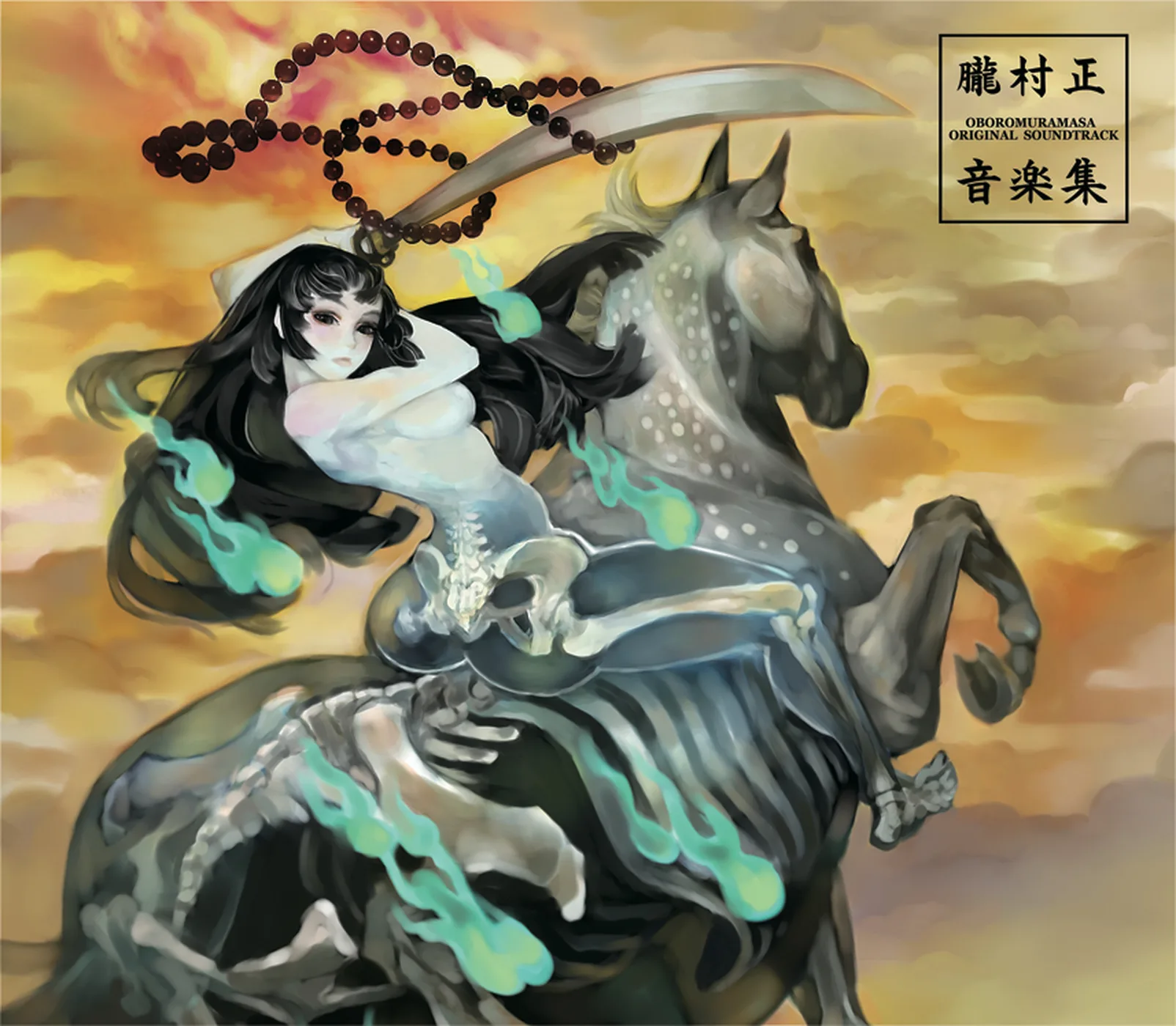
With Vanillaware and Marvelous preparing Muramasa: Genroku Kaikitan, it is a fine time to return to the sound world of Muramasa: The Demon Blade. The game makes an unusually forceful case for art and music as co-conspirators: its score is neither a superficial seasoning of Japanese instruments nor a simple pile of shamisen, shakuhachi, and taiko. It places the uncanny beside elegance, frenzy beside stillness, folk colour beside fantasy, and thereby creates a sound both ancient and strange.

A living ukiyo-e scroll
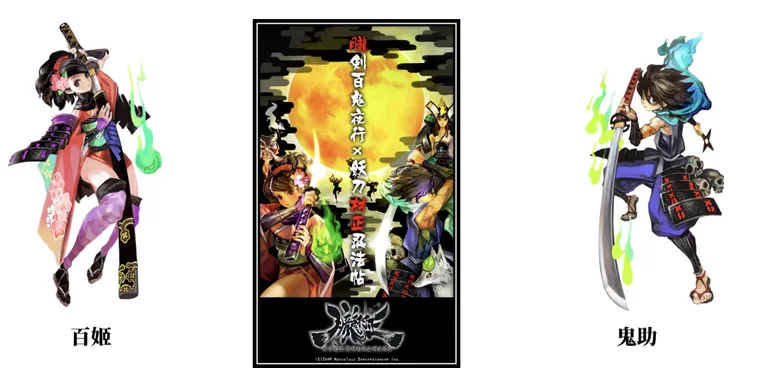
Set in the Genroku era, the game follows Momohime, the daughter of the Narukami domain's lord, and the amnesiac fugitive ninja Kisuke. Momohime is possessed by the swordsman's spirit Jinkuro Izuna; Kisuke, driven by a cursed blade, a promise, and a pursuit of demons, takes a different route through the same world.
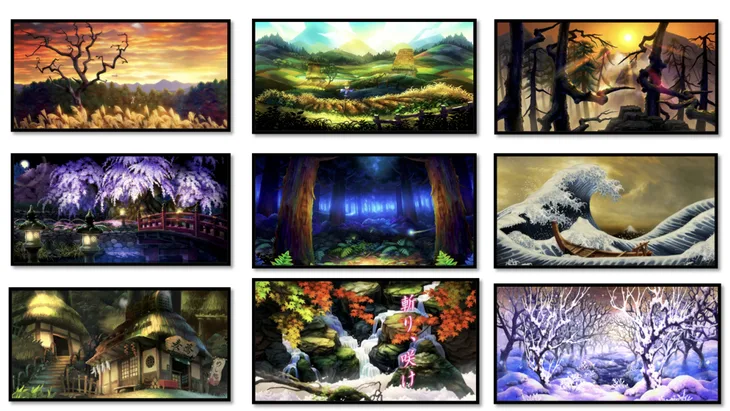
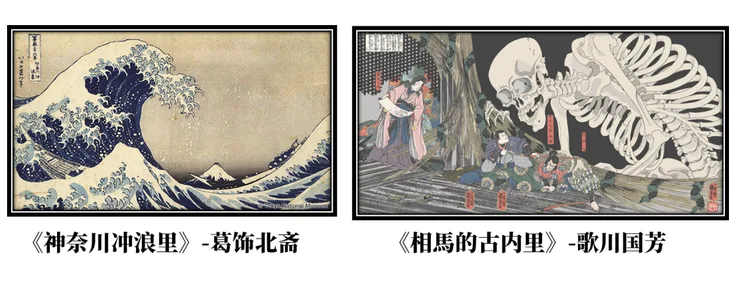
Vanillaware reworks ukiyo-e vocabulary into motion: red-light streets beneath falling cherry blossoms, temples, tide, snow ridges, and hazy moonlight piled in screen-like layers of colour. There are echoes of Hokusai and Kuniyoshi, but no retro filter. This is a living scroll, rendered with a care for breath, cloth, food, and movement that makes it feel as much craft as game.
The least literal Japanese sound, the richest otherness
Many Japanese-style game scores begin with a familiar vocabulary. Muramasa takes a more distilled route. It leaves the feeling of wabi-sabi and yugen inside the seams of melody, then brings that feeling back to contemporary ears through modern arrangement and electronic texture.
Hitoshi Sakimoto served as sound producer, working with six fellow Basiscape composers: Masaharu Iwata, Mitsuhiro Kaneda, Kimihiro Abe, Noriyuki Kamikura, Azusa Chiba, and Yoshimi Kudo. Seven composers do not produce fragmentation here. They create lateral colour within a shared aesthetic: never loose, never merely flashy, never treating tradition as an exhibit.
The original soundtrack spans three CDs and 57 tracks. Shamisen, shakuhachi, koto, shinobue, kagura bells, rock, techno, fusion, jazz, and orchestra all appear. The achievement is not the number of instruments but the fact that they seem to speak the same world-language.
Ah and Un: an interactive-music model
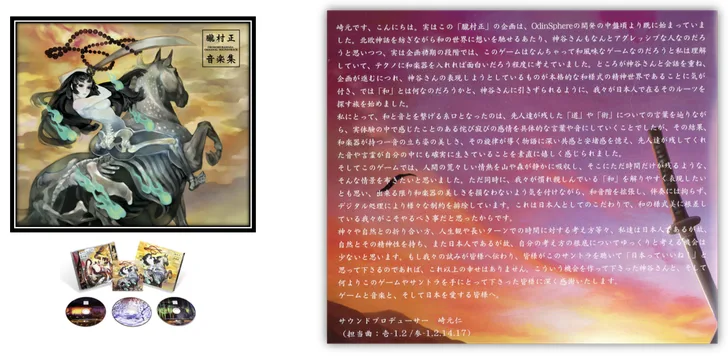
In the original liner notes, Sakimoto recalls that the project began during the development of Odin Sphere. An early idea was to combine techno with Japanese instruments. Conversations with George Kamitani led instead to a deeper search for a Japanese world of gods and spirits: its mountains, forests, time, and sense of animacy.
“We took great care not to damage the beauty of Japanese instruments, expanding their scales and using digital processing to remove constraints.”
This is why shamisen and shakuhachi can coexist with synthesizers and rock without sounding like a collision. Tradition is not a sample library; it is meaning that can be re-expressed.
Every exploration cue, marked “Ah,” has a corresponding battle cue, marked “Un.” These are not unrelated files but vertical rearrangements of the same scene: shared motifs and instrumental semantics, with changed speed and pulse. Crossfades move the player from the temperature of looking into the temperature of confrontation. The Ah/Un pairing is both an East Asian image of opening and closing, breath and response, and a superb reusable model of interactive music.
Selected tracks
Scores below weigh melodic memorability, arrangement, scene fit, and interactive effect.
1. Kaikan Hekitou / Opening Scroll, Cleaving Heads: Hitoshi Sakimoto, 8 / 10
Strings and koto phrases face one another as if cutting a seam in a gold screen. Heavy brass and chorus raise the ritual scale. The Western orchestral and Japanese colours are not collage but Sakimoto's signature, re-spoken in a Japanese setting: dark, solemn, and faintly compassionate.
2. Sekka Hanryu Ah / Un: Mitsuhiro Kaneda, 8 / 10
The music of the pleasure quarter rests Ah on piano, koto, and bass, with shinobue and koto carrying the line. Red lanterns, night cherry blossoms, and candlelit silhouettes produce beauty, solitude, and danger at once. Un sharpens the threshold with an urgent bassline, Japanese percussion, and the cry of shinobue. Desire and danger become one breath.
Listen to 「折花攀柳・阿/吽」 on Spotify
3. Kinden Gyokuro Ah / Un: Noriyuki Kamikura, 9 / 10
These city-stage cues show how splendour can become movement. Ah weaves electric guitar, synthesizer, strings, shamisen, shinobue, and kagura bells into rapid groove. Un turns guitar and drums into a low-frequency engine for battle, with a bright shamisen phrase breaking through the middle. On Hensou no Maku, Yoshimi Kudo's arrangement further clarifies the meeting of recorded Japanese instruments and rock.
4. Setsugetsu Fuka Ah / Un: Noriyuki Kamikura, 9 / 10
The music for Mount Fuji carries grace, speed, and a little grandeur. In Ah, heavy taiko suggests the weight of snow while shamisen, strings, and metallic percussion give form to wind, snow, and leaps across the slope. Un adds high-speed bassline, electric bass, drums, and shamisen, lending poised confidence to the blade work. Azusa Chiba's Hensou no Maku arrangement opens still further into female voice, chill-fusion, erhu, piano, and jazz-inflected exchange.
5. Shinzan Yukoku Un: Azusa Chiba, 10 / 10
My personal favourite. Piano and violin drive the melody over a trancelike bassline; translucent arpeggios, atmosphere pads, and deep reverb make the player seem to float inside a celestial folding screen. As a battle cue, Un intensifies its trance pulse into a clean, airborne rush. Kamikura's Hensou no Maku version moves it toward technopop, with erhu, fresh bassline, electric-guitar riff, piano solo, and electric-bass slap.
Conclusion: tradition as re-creatable meaning
Muramasa endures because it places the spiritual core of Japanese aesthetics, including wabi-sabi, yugen, and the animation of all things, inside melody and texture rather than decorating the surface with a Japanese-style formula. Rock, techno, fusion, jazz, orchestra, and traditional instruments coexist in a unified sound world.
Its lesson for contemporary music is direct: break convention without breaking spirit; treat tradition as a translatable system of meaning; make multiple expressions of a theme to serve interactive tension; and do not fear electric guitar or synthesizers when their semantic role is right. Game music remains a laboratory for musical innovation. At the boundary of tradition and the contemporary, Muramasa still teaches us how to find our own Ah and Un.
Listening
Listen to Oboromuramasa Music Collection Hensou no Maku on Spotify